Size a laptop backpack or laptop bag from the device's outer dimensions, not its screen size. Add roughly 1.5–2.5 cm to the device's width and depth for the padded compartment. A 13-inch laptop is typically about 30–31 cm wide, a 15.6-inch about 36 cm and a 17-inch about 39–40 cm, so a bag labelled 15 inch may not fit every 16-inch model.
The most common complaint about a laptop backpack or laptop bag is not quality, it is fit: the device does not go in, or it slides around inside a compartment two sizes too big. Screen size, the number on every label, is a poor guide because the same "15-inch" class covers laptops of different widths and bezels. This guide explains how to size laptop bags properly for 13- to 17-inch devices, which styles suit which buyers, and what to put in a specification when you develop a custom computer bag range.
How do you measure a laptop for a bag?
Measure the closed laptop's width, depth and thickness in centimetres and size the padded compartment from those, not from the screen diagonal.
Screen size is measured diagonally across the display only. The body around it varies with bezel width, hinge design and battery. Two laptops sold as 15-inch can differ by a centimetre or more in width, and modern 16-inch models with thin bezels are sometimes closer in body size to older 15-inch ones. For a range, take the largest common device you want to fit in each class and design to that.
Laptop bag size chart: 13 to 17 inch
The table gives typical outer dimensions by screen class and a recommended internal compartment size. Device dimensions are approximate ranges for current mainstream laptops; always check against the specific models your customers use.
| Screen class | Typical laptop width × depth | Typical thickness | Recommended compartment (W × H) |
|---|---|---|---|
| 11–12 inch / tablet | 27–29 × 19–21 cm | 0.7–1.8 cm | about 29–30 × 22 cm |
| 13–13.3 inch | 30–31 × 21–22 cm | 1.2–1.8 cm | about 32–33 × 24 cm |
| 14 inch | 31–32.5 × 22–23 cm | 1.5–2.0 cm | about 34 × 25 cm |
| 15.6 inch | 35.5–36.5 × 23.5–25 cm | 1.8–2.5 cm | about 38 × 27 cm |
| 16 inch | 35.5–36 × 24.5–26 cm | 1.6–2.2 cm | about 38 × 28 cm |
| 17–17.3 inch | 39–40 × 26–27.5 cm | 2.0–3.0 cm | about 42 × 30 cm |
The allowance of roughly 1.5–2.5 cm over the device covers the padding, the curve of the zip track and the hand needed to slide the laptop in. Less than that and the zip strains at the corners; much more and the laptop moves around, which defeats the padding. A tablet and a 13-inch laptop are close enough that many mini computer bags cover both.
Which style: laptop backpack, shoulder bag or tote?
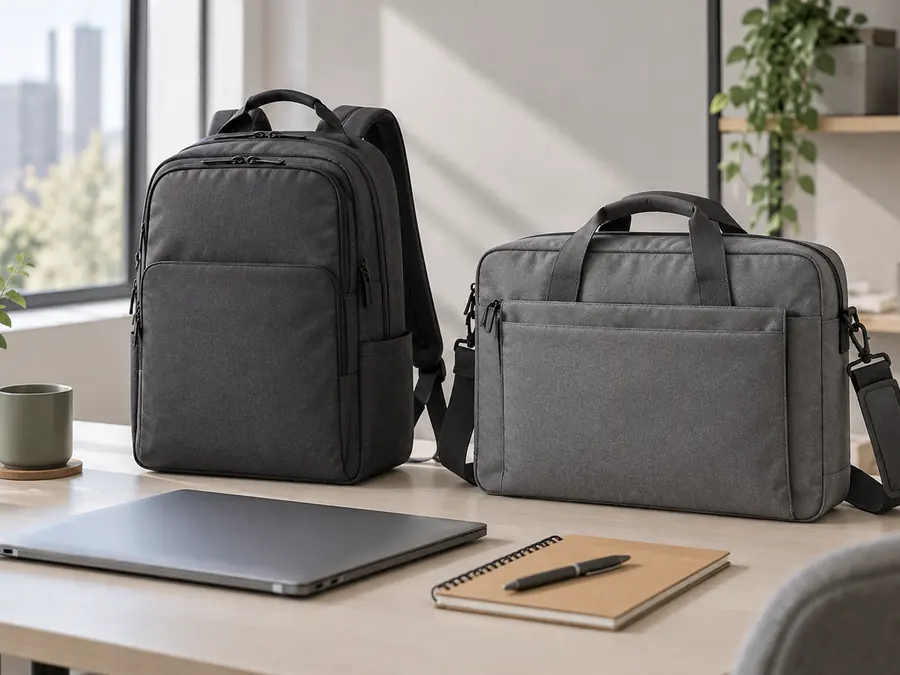
Choose the carry style by how far the user walks and what else they carry. Backpacks spread weight for commuting; shoulder bags and briefcases suit car and office use; totes suit lighter loads and fashion-led ranges.
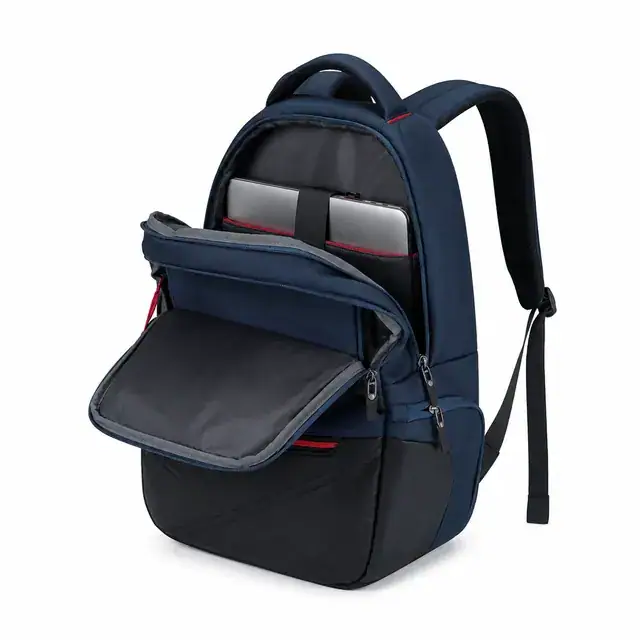
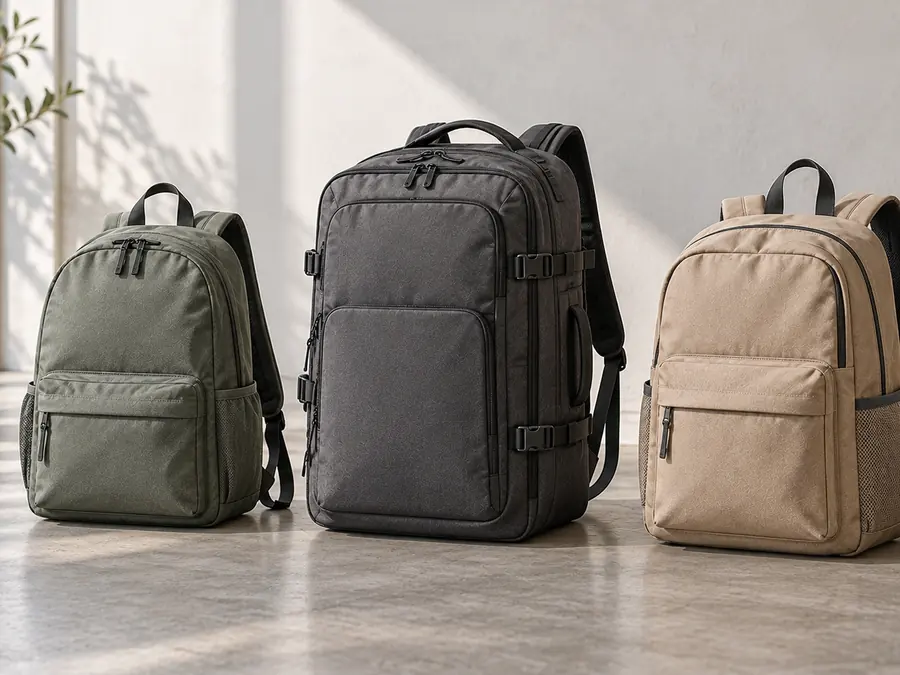
- Laptop backpack: the best laptop backpack for work or school puts the laptop compartment against the back panel, where it is protected and the weight sits close to the spine. Look for a suspended or raised compartment so the device does not hit the ground when the bag is put down. Our custom school and laptop backpack in 1680D at 30.5 × 16 × 46 cm is a typical tech backpack base.
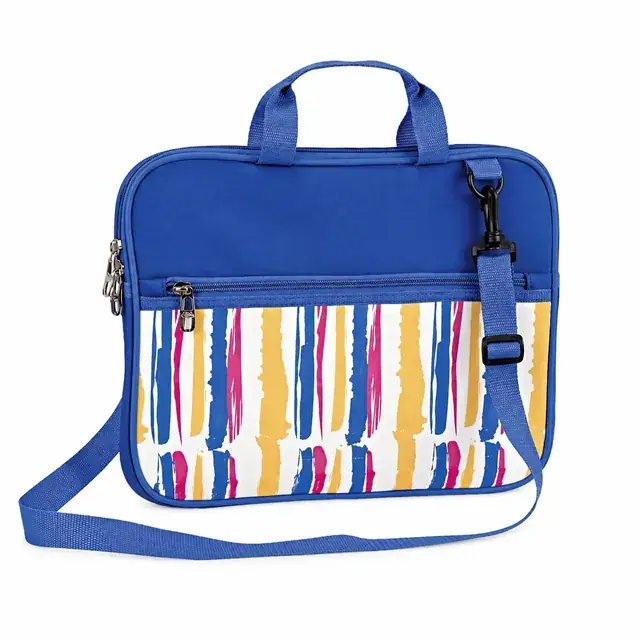
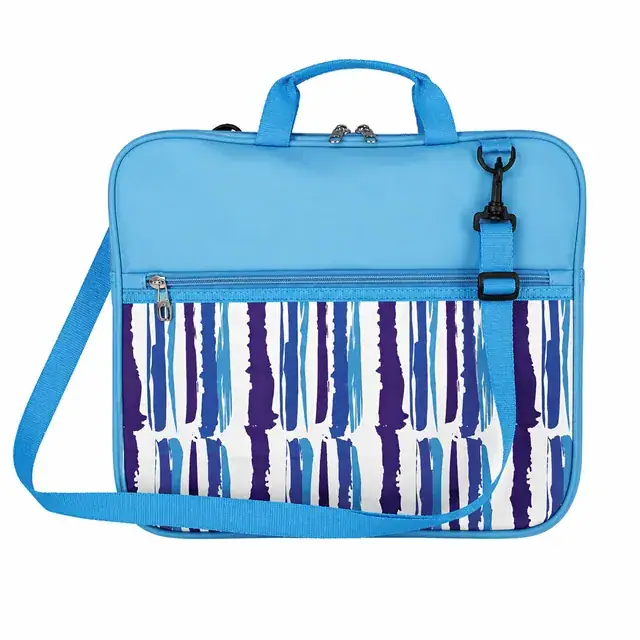
- Business shoulder bag or laptop briefcase: slim, structured, often with a trolley sleeve. See the 13-inch waterproof business shoulder bag and the 15-inch large-capacity shoulder laptop bag.
- Messenger bags: a flap over the main compartment and a cross-body strap; popular as a male laptop bag and with students.
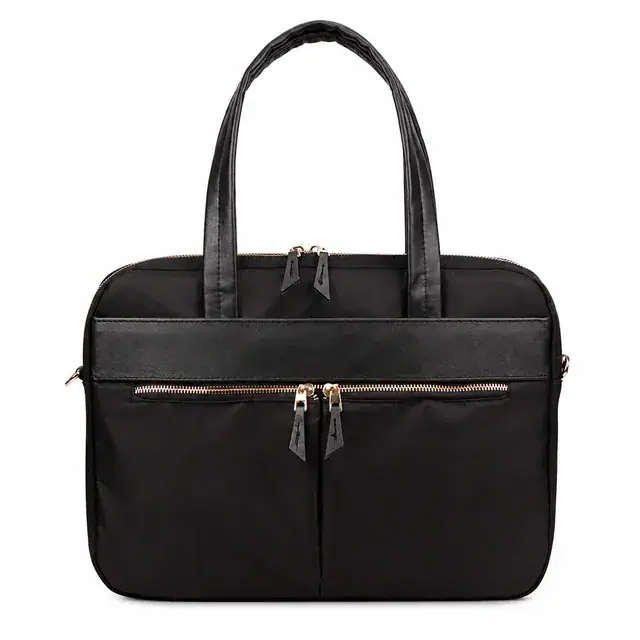
- Laptop tote: open or zipped, worn on the shoulder. The most requested format for a laptop bag for women, often with a separate padded sleeve inside. The minimalist waterproof nylon laptop tote is a clean base for this.
- Camera and computer backpack: a padded insert for lenses plus a laptop slot, as in our canvas and PU camera and laptop backpack.
Laptop bags for women and men: what actually differs?
The fit of the device is the same; what differs is strap length and drop, silhouette, internal organisation and finish. Good ranges design these deliberately rather than just changing colour.
Computer bags for women typically sell on a softer silhouette, a shorter handle drop for carrying over the shoulder or forearm, a cross-body option and an organised interior for a phone, cables and small items. Finishes such as faux leather, quilting or a decorative scarf matter. The stylish cross-body laptop bag with silk scarf is an example, with faux leather available as an option. Laptop bags for men lean towards structured shapes, darker fabrics such as 1680D polyester, and more external pockets. Many stylish ladies' laptop bags and men's business backpacks share the same internal compartment; only the outer pattern changes.
On materials: we work in polyester, nylon, SPR, canvas, cork leather and PU or faux leather. Genuine leather laptop bags are not part of our catalogue.
What makes a laptop bag protective?
Protection comes from padding on all sides, a raised base, a closure that holds the device in place and seams that survive the load. Fabric weight alone does not protect a laptop.
- Padding on six sides, including the base and the top flap or zip edge. Foam of around 5–10 mm is common in laptop compartments.
- A false bottom: the compartment ends a few centimetres above the bag's base, so a dropped bag lands on air, not on the laptop.
- A securing strap or hook-and-loop tab across the top of the device.
- A soft-touch lining such as microfiber, which avoids scratching the lid.
- Water resistance through a coated outer fabric, a waterproof finish and, ideally, a zip garage or storm flap.
- Load-tested straps: we run a handle or strap pull (5 kg for 60 seconds) and a 50-cycle zip test on our orders, plus carton drop tests on packed goods.
None of these is a guarantee that a device will survive every drop, and responsible product copy should say "padded" or "protective" rather than promising damage-proof carry.
How to spec a custom laptop backpack range
Start from the device classes you want to cover, choose a base model for each, and keep hardware and fabric consistent across the range.
A typical development plan:
- Pick two or three size classes, usually 13–14, 15.6–16 and, where your market needs it, 17 inch.
- Write the internal compartment dimensions for each class from the table above.
- Choose one outer fabric family and one zip and buckle specification across all models, so they look and wear the same.
- Decide on decoration: woven label, PU patch, embroidery or print.
- Approve a counter sample for each size with the target device inside.
Catalogue models start at 500 pieces per colour; a new pattern starts at 1,000 pieces per colour. Our current laptop and computer bags run from tablet-size cases to 15-inch shoulder bags; a 17 inch laptop backpack or 17 inch laptop bag is a new-pattern brief built on the same constructions. Samples take 7–12 days, bulk 25–35 days after approval.
When you have device sizes and quantities, send the brief to our export desk for a written quote within one working day.
Frequently asked
Will a 15 inch laptop bag fit a 16 inch laptop?
Sometimes. Many 16-inch laptops have thin bezels and a body only slightly larger than older 15.6-inch models, but some are deeper. Measure the laptop's width and depth and compare them with the bag's internal compartment, allowing 1.5–2.5 cm. If the compartment is less than that, choose the next size up.
What size backpack do I need for a 17 inch laptop?
A 17-inch laptop is typically about 39–40 cm wide and 26–27.5 cm deep. Look for a laptop compartment of around 42 × 30 cm internally, which usually means a backpack at least 45–48 cm tall. Check the thickness as well, because many 17-inch machines are 2.5 cm or more.
What is the difference between a laptop bag and a notebook bag?
None in practice. "Notebook" is an older and regional word for a laptop computer, so a notebook bag, a laptop notebook backpack and a computer bag describe the same products. Sizing is still done by the device's outer dimensions and screen class.
Is a laptop backpack better than a shoulder bag?
For walking, cycling and public transport, a laptop backpack spreads the weight over both shoulders and keeps hands free. For car commuting, client meetings and short carries, a shoulder bag or laptop briefcase looks more formal and gives quicker access. Many business users own one of each.
What is the minimum order for custom laptop bags?
For a catalogue laptop bag or backpack with your logo, the minimum is 500 pieces per colour. A new pattern, such as a 17-inch backpack or a custom size, starts at 1,000 pieces per colour. A counter sample takes 7–12 days, and bulk production 25–35 days after approval.