A duffle bag is a soft top-zip holdall for travel and sport; a gym bag is a duffle sized and fitted for training, with a ventilated shoe compartment, wet pocket and bottle pocket. Choose 20–35 L for the gym, 35–50 L for weekends or carry-on, and 60 L or more for longer trips. 600D PU-coated polyester is the usual default fabric.
A duffle bag looks like the simplest bag in the catalogue: a tube of fabric, a zip and two handles. The difference between one that sells and one that comes back is in the details: the size in litres, where the shoes go, how the base wears, and whether the strap hardware survives a full load. This guide covers how to specify gym bags and travel duffel bags for a retail, sports-club or corporate range, from compartments and sizes to fabrics and finishing.
What is the difference between a duffle bag and a gym bag?
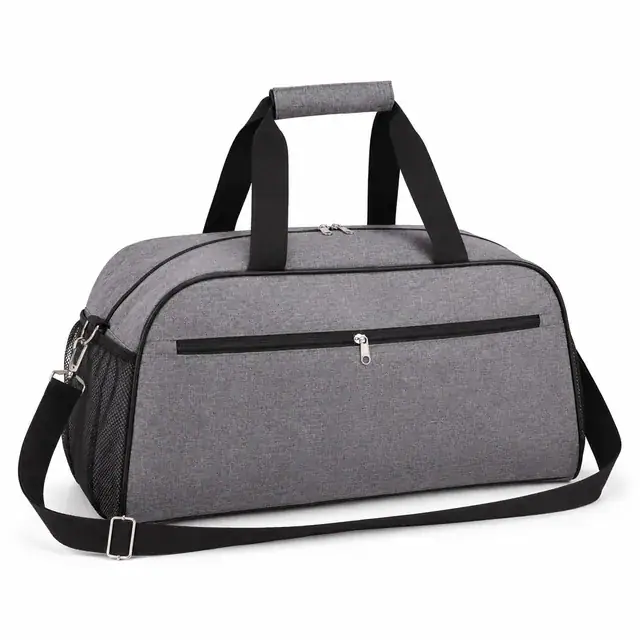
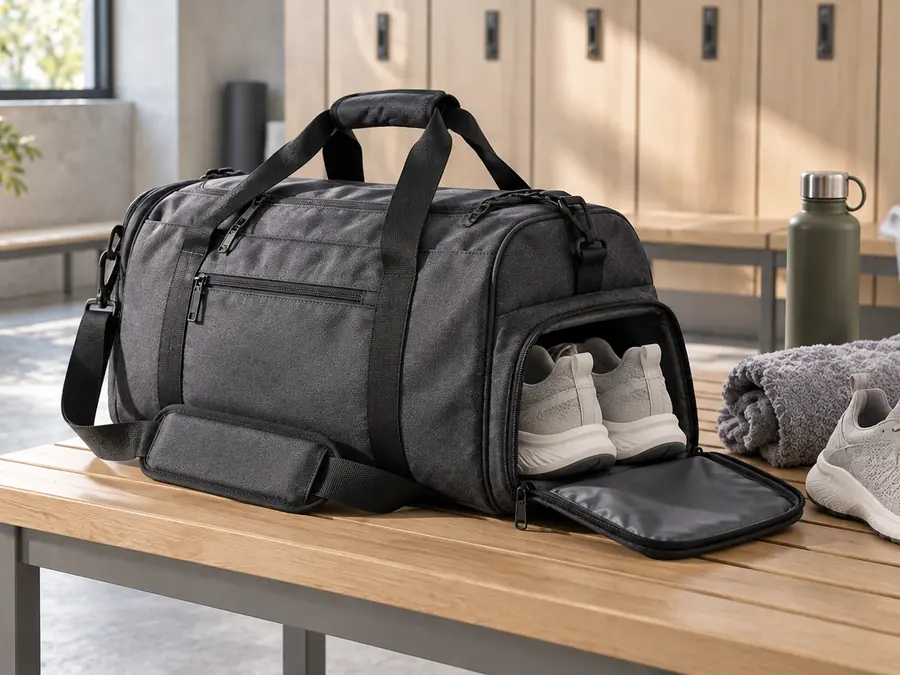
A duffle bag is a soft, usually cylindrical or rectangular holdall with top-zip access and carry handles, used for travel and sport. A gym bag is a duffle (or sports backpack) sized and fitted for training: a shoe compartment, a wet pocket, bottle storage and easy-clean fabric.
In practice the two overlap. Travel duffel bags lean toward larger volumes, a luggage-friendly shape and a padded shoulder strap; gym bags lean toward compact sizes, ventilation and separate storage for wet or dirty kit. Many ranges sell one construction in two sizes and let the features differ.
Duffle bag sizes: choosing the right capacity
Duffle bags are sized by volume in litres. Roughly, 20–35 L suits a gym session, 35–50 L a weekend or carry-on trip, and 60 L or more a week away or team kit. Calculate volume from internal length × width × height.
The arithmetic is simple: multiply the internal dimensions in centimetres and divide by 1,000. Our 55 × 23 × 28 cm large-capacity gym bag works out at about 35 L as a box measure, which places it between a gym bag and a weekend bag. Rounded ends and soft sides reduce real usable volume slightly, so quote litres conservatively on the swing tag.
| Use | Typical capacity | Typical features | Notes for buyers |
|---|---|---|---|
| Gym and fitness | 20–35 L | Shoe compartment, wet pocket, bottle pocket, grab handles | Compact enough for a locker; light colours show dirt |
| Weekend and carry-on duffle | 35–50 L | Padded shoulder strap, end pockets, luggage trolley sleeve | Check the cabin limits of your target airlines; many sit around 55 × 40 × 20 cm, but they vary |
| Large travel or team duffle | 60 L and above | Reinforced base, D-ring strap anchors, internal dividers | Handle and strap stitching must carry the full packed weight |
| Foldable or collapsible duffle | 30–50 L | Packs into its own pocket, light fabric | Light fabrics trade durability for packability |
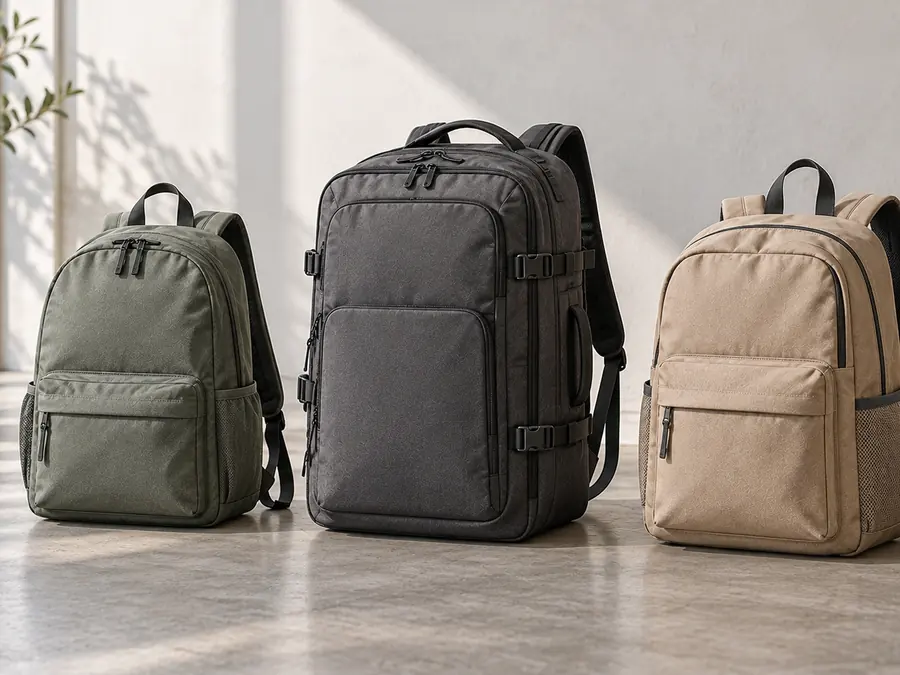
| Sports backpack | 20–30 L | Shoe pocket at base, ventilated back, laptop sleeve option | Suits cyclists and commuters who train after work |
Compartments that make the best gym bags
The best gym bags separate clean from dirty and wet from dry. A ventilated shoe compartment, a waterproof wet pocket and a bottle pocket are the three features shoppers check first; everything else is secondary.
- Gym bag with shoe compartment. Usually an end pocket or a base tunnel with its own zip and a mesh or eyelet vent. Line it with a wipe-clean coated fabric.
- Wet pocket. A PEVA- or TPU-lined pocket for towels and swimwear. A welded liner holds moisture; a stitched one leaks.
- Side mesh pocket. For a water bottle or shaker, kept outside the main compartment.
- Valuables pocket. A small zipped internal pocket for keys and cards.
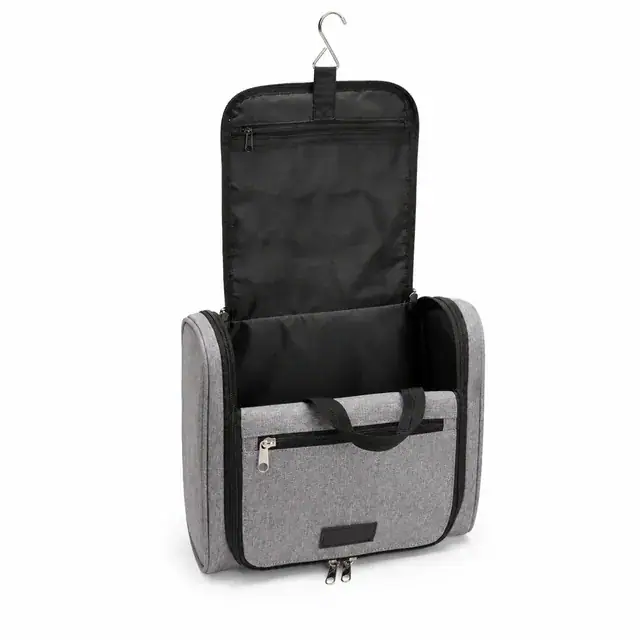
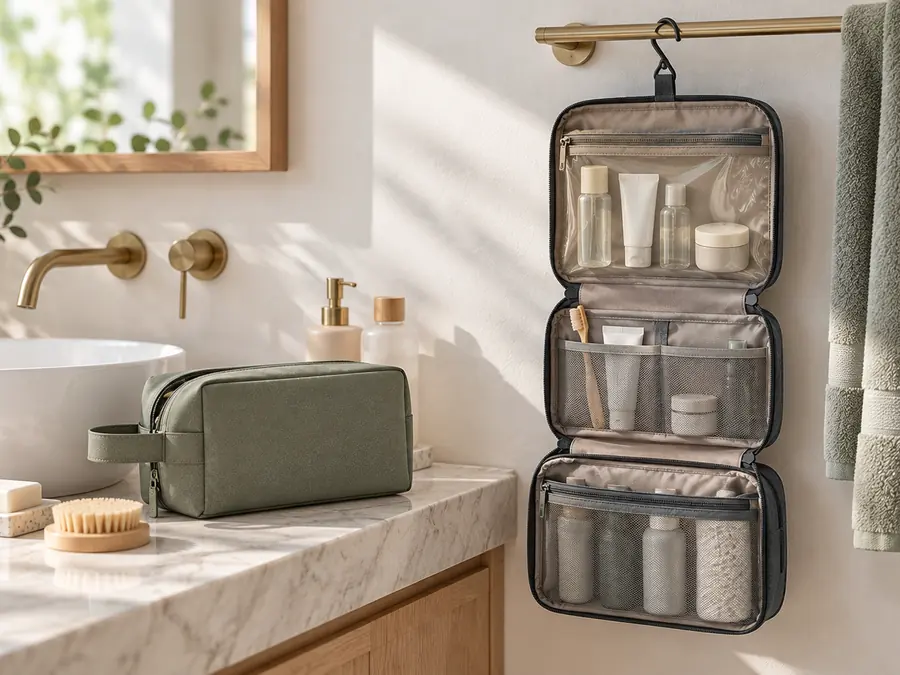
- Toiletry kit. A matching pouch is an easy add-on that lifts the set price. Our hanging travel toiletry bag is a typical companion item.
Avoid adding pockets for their own sake. Each zip and pocket adds cost, weight and another point of failure. Three well-made compartments beat seven flimsy ones.
Fabrics for gym bags and travel duffel bags
For most gym bags, 600D PU-coated polyester is the right default: light, printable, easy to clean and economical. 1680D polyester gives a tougher, more premium look for travel duffles; canvas suits heritage styles; waterproof travel bags need coated or laminated fabric with taped or welded seams.
| Fabric | Look and feel | Strengths | Trade-offs |
|---|---|---|---|
| 600D polyester, PU coated | Smooth, sporty | Light, prints well, wide colour range | Specify weight in g/m², not just denier |
| 1680D polyester | Ribbed, premium | Abrasion resistance, holds shape | Heavier and stiffer; larger folded carton |
| Cotton canvas | Heritage, matt | Ages well, premium handfeel | Heavy; not water resistant unless treated |
| Nylon ripstop | Light, technical | Ideal for foldable duffle bags | Less structure; needs careful seam finishing |
| PU or PVC-coated fabric | Glossy or matt, wipe-clean | Water resistance for waterproof travel bags | Seams must be sealed to justify a waterproof claim |
RPET 600D typically costs 8–15% more than virgin 600D, and a GRS transaction certificate supports a recycled-content claim. Our bag fabric guide covers weights, coatings and costs in more detail. Leather duffle bags are not part of our catalogue; for a leather look, PU-coated fabrics and PU trims are the options we work with.
Construction details that decide durability
Duffle bags fail at the stress points: handle joins, strap anchors, the base and the main zip. Specify those four and most returns disappear.
- Handles. Webbing handles wrapping under the base, with bar-tacked joins. We pull-test handles at 5 kg for 60 seconds as a minimum; ask for a higher load on large duffles.
- Shoulder strap. Metal or high-strength hooks and D-rings, a padded shoulder pad and anchors stitched through reinforcement.
- Base. A coated or doubled base panel, optionally with feet on larger sizes, and a removable stiffener if the bag must stand up.
- Zip. A heavier zip gauge on the main opening, with a two-way slider for wide-mouth access. We run a 50-cycle zip test at inspection.
- Seams. Bound internal seams for clean finishing; taped or welded seams for any waterproof claim.
Custom duffle bags and gym bags for brands and teams
Personalized duffle bags and custom gym bags take most decoration methods: screen print, heat transfer, embroidery, woven labels, and silicone or PU patches. On a duffle, the end panels and the front face are the best logo positions.
Commercial points for a custom duffle bag programme:
- MOQ is 500 pcs per colour on a catalogue model and 1,000 pcs per colour for a new pattern or custom-dyed colour.
- A counter sample takes 7–12 days, with the fee credited against bulk; bulk takes 25–35 days after approval, plus about a week from July to October.
- Inline checks at 20% and 80%, then pre-shipment inspection to ISO 2859-1 General Level II at AQL 2.5 major / 4.0 minor.
- Terms are EXW, FOB Shanghai or Ningbo, CIF or DDP; sea freight is 28–40 days to North Europe or the US East Coast.
Sports bags are a smaller family in our catalogue than coolers, so many duffle programmes start as a brief adapted from a catalogue model. See the sports and gym bags range, and the travel and work carry range project for how one hardware platform runs across several bag types. When you are ready, send us your size, fabric and logo brief and we will reply in writing within one working day.
Frequently asked
What size duffle bag do I need for travel?
For a weekend or carry-on trip, 35–50 litres is typical; for a week or more, 60 litres or larger. To check a bag, multiply its internal length, width and height in centimetres and divide by 1,000. For carry-on use, compare the outer dimensions with the cabin limits of the airlines you fly, which vary.
What should a good gym bag have?
A ventilated shoe compartment, a waterproof wet pocket for towels and swimwear, a side pocket for a bottle, a small valuables pocket and an easy-clean fabric such as 600D PU-coated polyester. Strong handle joins and a padded shoulder strap matter more than extra pockets, which add cost and weight.
Is a duffle bag or a sports backpack better for the gym?
A duffle bag holds bulkier kit and opens wide, so it suits people driving to the gym or carrying towels and shoes. A sports backpack leaves both hands free and carries better over distance, so it suits cyclists and commuters. Many ranges offer both in the same fabric and colourway.
Are foldable duffle bags durable?
They can be, if the fabric and seams are specified properly. Foldable duffles use lighter fabrics such as nylon ripstop so they pack small, which trades some abrasion resistance for packability. Reinforced handle joins, bound seams and a doubled base keep a foldable travel bag serviceable for regular use.
What is the minimum order for custom duffle bags?
Our MOQ is 500 pieces per colour on a catalogue model and 1,000 pieces per colour for a new pattern or custom-dyed colour. A counter sample takes 7–12 days, and bulk production takes 25–35 days after sample approval, with about a week extra in peak season from July to October.