To keep a cooler cold at the beach, choose a light-coloured soft cooler with at least a 10 mm foam wall, a welded liner and a storm flap over the zip, pre-chill it, pack it full and keep it in shade. For retail, beach coolers also need sand-shedding fabric, corrosion-resistant zips and hardware, and decoration that survives salt water and UV.
The beach is the hardest everyday environment a soft cooler faces. Direct sun heats the outer shell, sand gets into zips, salt water attacks metal hardware, and the bag is opened every half hour. A cooler at the beach that would be fine in a shaded park can be warm by early afternoon. Beach coolers and beach bags also sell heavily as custom and personalized items, which adds decoration to the list of things that must survive.
This guide from the Eggroll Bags export desk covers how to keep things cold on the sand, what to specify for a beach range, and how custom, personalized and monogrammed beach bags are actually produced.
How do you keep a cooler cold at the beach?
Start with a properly insulated bag, then manage sun and opening. Construction sets the ceiling; how the bag is used decides how close you get to it.
Our published design data gives a baseline: a 10 mm EPE foam wall with a welded leak-proof liner and two gel packs holds refrigerated food below 8 °C for roughly 6–8 hours at 25 °C ambient. Beach conditions are usually harsher than that, so treat it as a ceiling. Thicker 15–20 mm walls, a zip storm flap and a light outer colour all extend hold time.
- Pre-chill the bag and contents. Put the cooler somewhere cold the night before and pack only food and drinks that are already chilled.
- Pack it full. Empty air warms quickly; fill gaps with extra gel packs or frozen water bottles.
- Keep it in shade. Under an umbrella or towel, not on open sand. A light outer colour helps when shade moves.
- Open it less. Keep drinks you will reach for often in a separate small cooler or bottle sleeve.
- Raise it off hot sand if you can — a folded towel underneath reduces heat from below.
What to look for in beach coolers: sand, salt and sun
A good beach cooler is a well-insulated cooler with three extra defences: against sand, salt and UV. Each one maps to a specific line in the specification.
| Beach problem | What goes wrong | Specification fix |
|---|---|---|
| Sand | Grit jams zip teeth and sticks to rough fabric | Smooth PU- or PVC-coated outer fabric; larger-gauge coil zips; a storm flap that covers the zip line |
| Salt water | Metal sliders, rivets and D-rings corrode and stain fabric | Plastic or coated hardware where possible; resin or coil zips rather than bare metal teeth |
| Sun and heat | Dark shells absorb heat; prints fade | Light outer colours; thicker foam wall; decoration method matched to the fabric |
| Meltwater and wet towels | Leaks inside the bag or soaks the outside | Welded liner; a separate dry pocket for phones and keys; wipe-clean base |
| Weight on soft sand | Wheels sink; thin handles cut into hands | Padded shoulder straps, or wide wheels on rolling formats |
The cooler bag insulation guide goes deeper into foam and liner choices. On every cooler order we run a liner leak test on site (1 litre of water for 10 minutes), a 50-cycle zip test and a handle pull test before shipment.
Beach cooler formats compared
The best beach cooler depends on how far it travels from the car and how many people it serves. Five formats cover most beach ranges.
| Format | Best for | Watch out for |
|---|---|---|
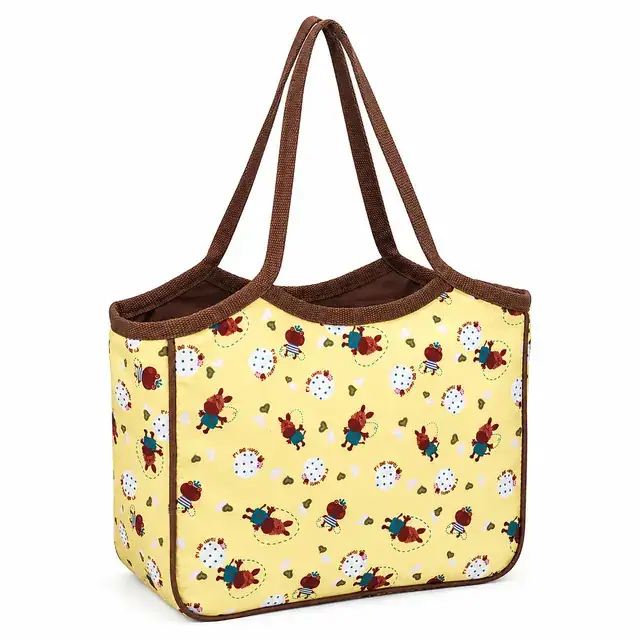
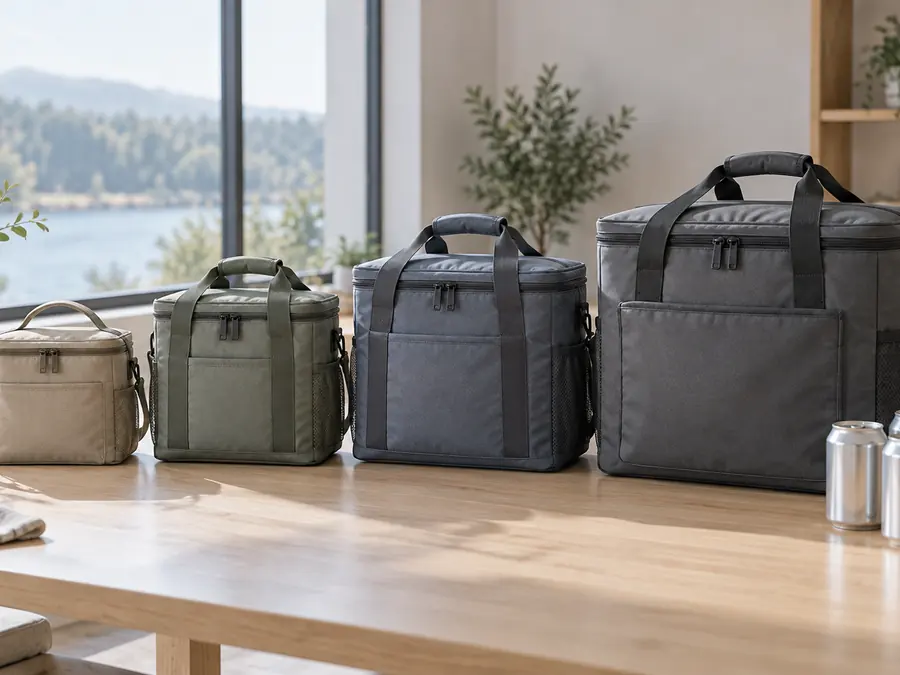
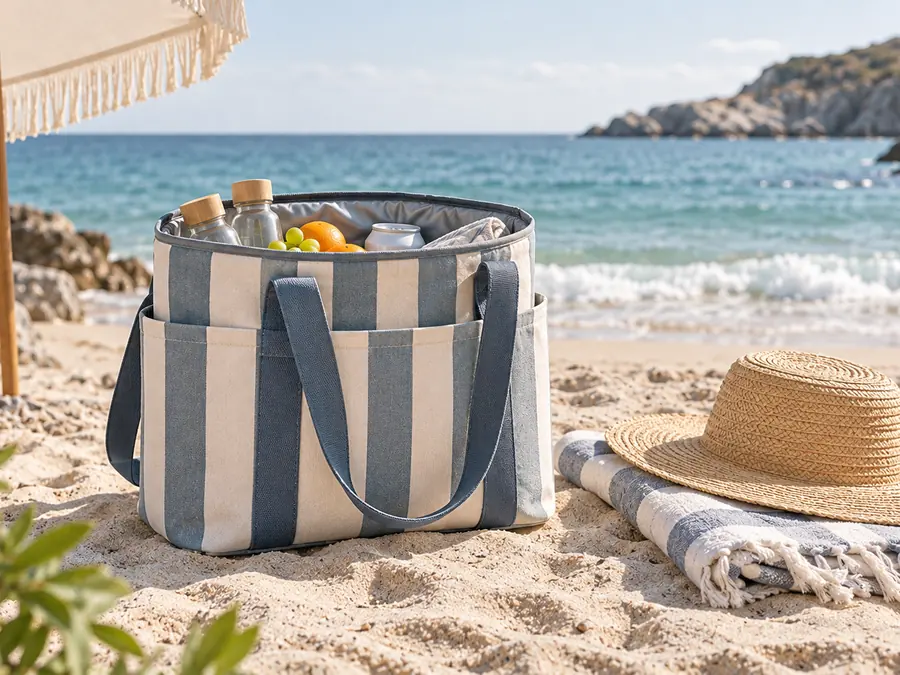
| Beach cooler tote | Family days, short walks from the car | Shoulder strap comfort when full |
| Small beach cooler or lunch cooler | One or two people, drinks and snacks | Capacity claims — check inner dimensions |
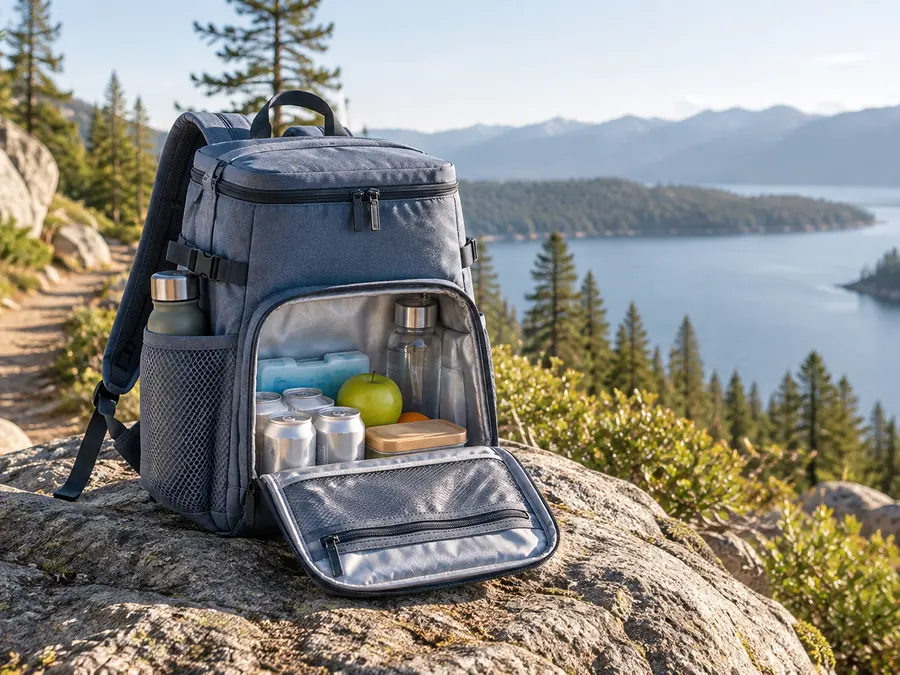
| Cooler backpack | Long walks over dunes or to coves | Back panel must stay dry |
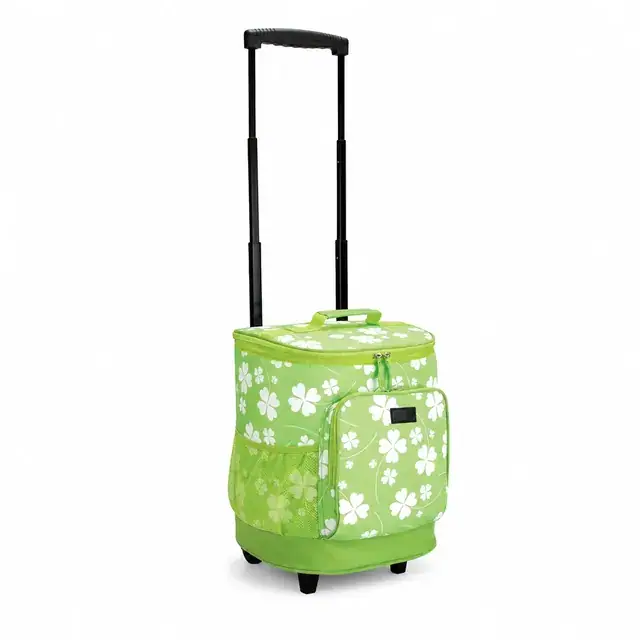
| Rolling cooler on wheels | Boardwalks, paved promenades, car parks | Narrow wheels struggle on soft sand |
| Mesh beach tote | Towels, toys and anything sandy | Not insulated — pair it with a cooler |
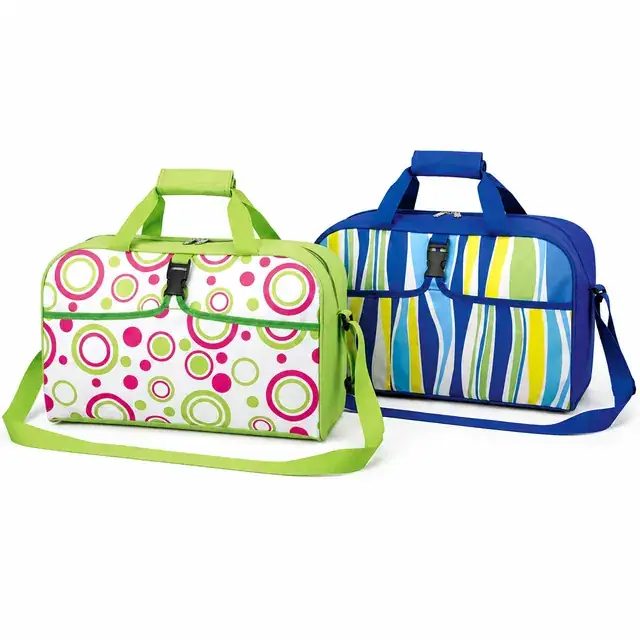
In our catalogue, the custom beach cooler bag (42 × 19.5 × 26 cm, 600D polyester with PEVA lining) is a family-size tote, the insulated cooler beach bag (31 × 12.5 × 27 cm) is a slimmer single-shoulder format, and the insulated rolling cooler trolley bag covers the beach-bag-on-wheels need for promenades and paved access. More options sit in the outdoor and picnic cooler range.
Where does a mesh beach bag fit?
A mesh beach bag is for carrying sandy, wet things — towels, toys, snorkels — and letting the sand fall through. It is not a cooler and should not be sold as one.
We do not list a standalone mesh beach tote in the catalogue. Mesh is, however, a normal component on our bags: side pockets, outer drop-through panels and organiser sleeves. A practical retail answer is a beach set — an insulated cooler with a mesh outer pocket, or a cooler sold alongside a matching pouch. If you want a dedicated mesh tote or a jute beach bag in your range, send us a brief and we will tell you honestly whether it fits our partner factories.
Custom and personalized beach bags: decoration that survives
Custom beach bags need decoration matched to the fabric and the environment. Salt, sunscreen, sand abrasion and UV all attack prints faster than everyday use.
- Sublimation gives full-colour, all-over patterns on light polyester grounds and does not crack, because the ink sits inside the fibre. It is the usual choice for tropical and stripe prints.
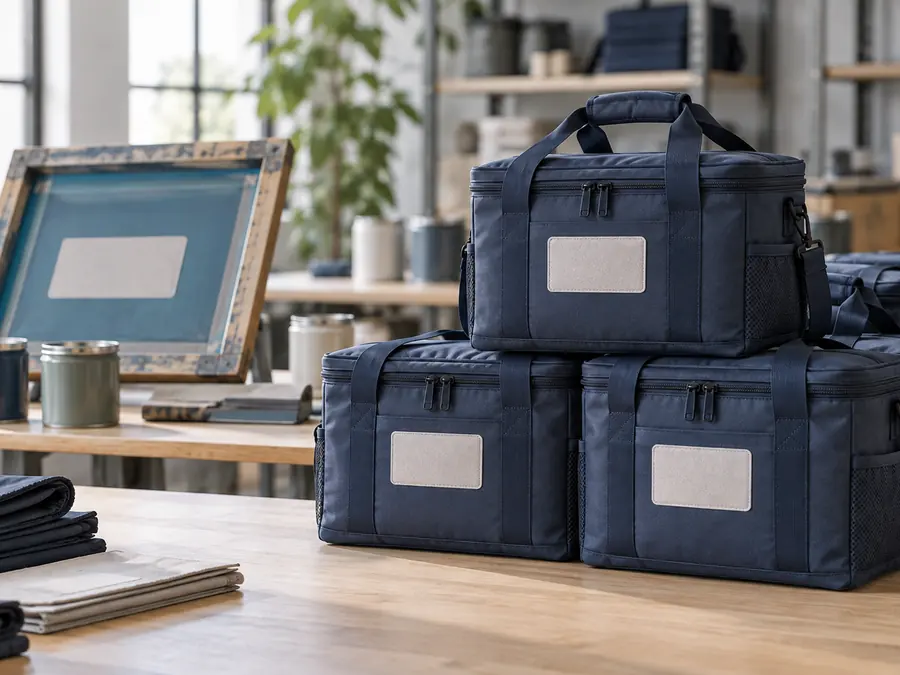
- Screen print suits one- to three-colour logos on coated fabric. Specify Pantone C references and ask for a rub test result.
- Heat transfer handles detailed multi-colour logos on small areas; position it away from fold lines.
- Embroidery and woven labels look premium and resist abrasion, but embroidery through an insulated wall needs a backing so the needle holes do not reach the liner.
- Silicone or PU patches are durable and wipe clean, which suits sandy bags.
Every decorated order gets a print rub check during inspection. For colour-critical programmes, fabric is matched to Pantone TCX or TPG with lab dip approval before bulk.
Monogrammed beach bags: batch logos versus individual names
A monogrammed beach bag carries a different name or initials on each piece. That is a finishing service, not a factory production run, and buyers should plan for it separately.
We decorate in batches: the same logo or artwork on every piece in a colour run. One-name-per-bag monogramming is normally done after import, by the retailer or a local embroidery or heat-press service. What we can do is design for it: leave a flat, unobstructed front panel or pocket, choose a fabric that takes heat-press vinyl or embroidery well, and supply blanks to that specification. Personalized beach totes sold online are usually built this way.
Wholesale beach bags: MOQ and seasonal timing
Beach product sells in a short window, so timing matters more than for most categories. Work back from the date the goods must be in your warehouse.
Our MOQ is 500 pieces per colour on a catalogue model and 1,000 pieces per colour for a new pattern or custom-dyed colour. A counter sample takes 7–12 days, bulk runs 25–35 days after sample approval, and sea freight to North Europe or the US East Coast takes 28–40 days.
As a worked example for a Northern Hemisphere summer: to have stock in a warehouse by mid-March, goods need to sail by around early February. Chinese factories close for an extended break around the Lunar New Year in late January or February, so bulk should be finished before that. That means approving samples by early December and briefing in October or November. Southern Hemisphere ranges shift by about six months, which places production in the July–October peak, when we add roughly a week.
Beach cooler brief checklist
- Format (tote, backpack, rolling, small cooler) and target retail price
- Inner dimensions and can count, with gel packs included
- Foam wall thickness and liner type (welded PEVA or TPU)
- Outer fabric, coating and Pantone colour; light shades preferred
- Zip type and gauge; storm flap; hardware material
- Dry pocket, mesh pocket, bottle opener or other features
- Decoration method, position and size; monogram panel if needed
- Test reports required in your name (REACH, Prop 65, food-contact migration on liners)
- Warehouse date, so we can plan sampling around the Lunar New Year closure
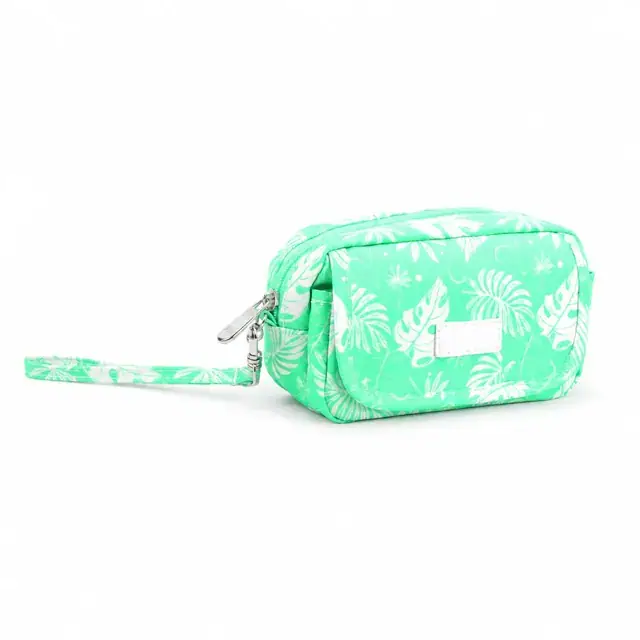
For a matching accessory, the water-resistant summer beach pouch takes the same logo and pairs well with a cooler as a set.
Frequently asked
How do I keep my cooler cold at the beach?
Pre-chill the cooler and its contents, pack it full with gel packs or frozen bottles, keep it in shade and open it as little as possible. A light-coloured soft cooler with at least a 10 mm foam wall, a welded liner and a storm flap over the zip performs noticeably better on the sand than a thin, dark one.
What is the best beach cooler for a family day out?
For short walks from the car, a beach cooler tote of around 20–30 litres with a padded shoulder strap suits most families. For long walks over dunes, a cooler backpack spreads the weight better. Rolling coolers work on boardwalks and paved paths but struggle on soft sand unless the wheels are wide.
Can you make personalized beach bags with individual names?
We produce batch decoration — the same logo or artwork across a colour run. Individual names or monograms are normally added after import by a retailer or local embroidery or heat-press service. We can supply blanks with a flat front panel and a fabric chosen to take embroidery or heat-press vinyl cleanly.
Is a mesh beach bag insulated?
No. A mesh beach bag is designed to let sand and water drain through, so it cannot hold cold. It is best for towels and toys. If you want both functions, pair a mesh tote with a soft cooler, or specify a cooler with a mesh outer pocket for wet or sandy items.
What is the MOQ for custom beach bags?
For a catalogue model, 500 pieces per colour with your logo. For a new pattern or a custom-dyed colour, 1,000 pieces per colour. Small trial runs of 100–300 pieces are sometimes possible on pouches at a higher unit price. A counter sample takes 7–12 days, with the fee credited against bulk.