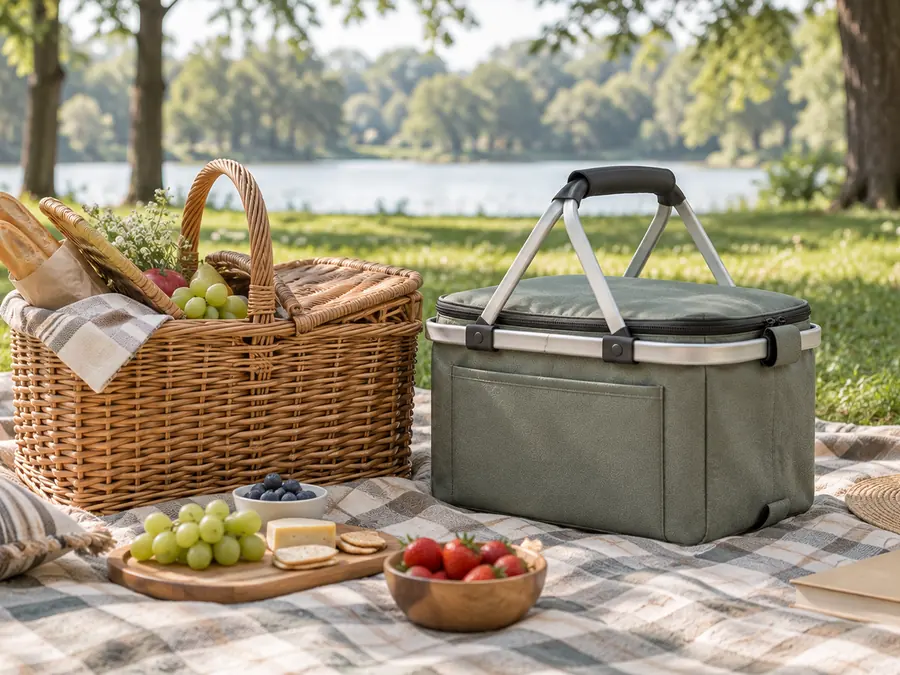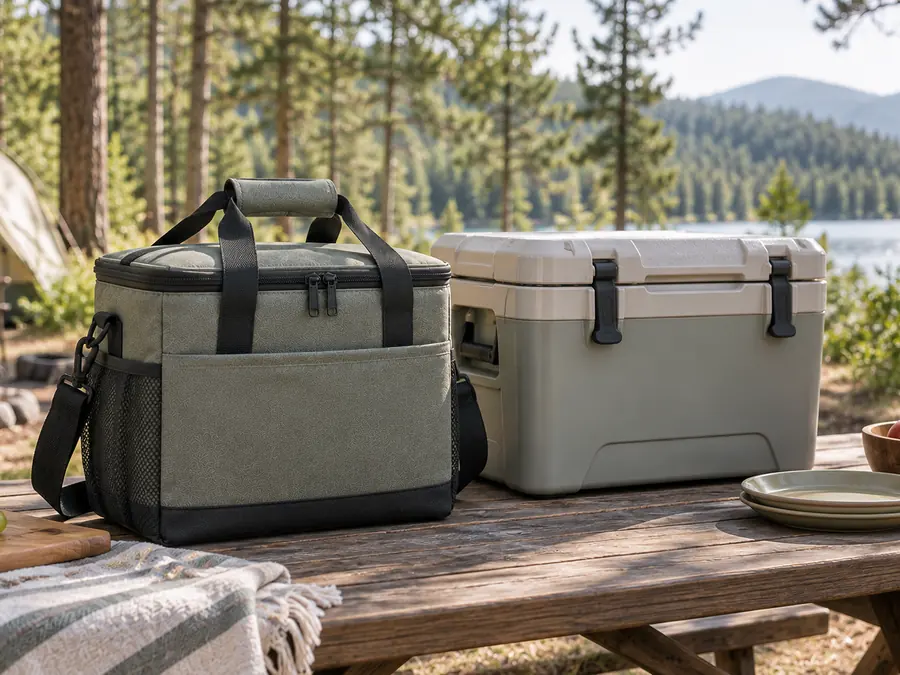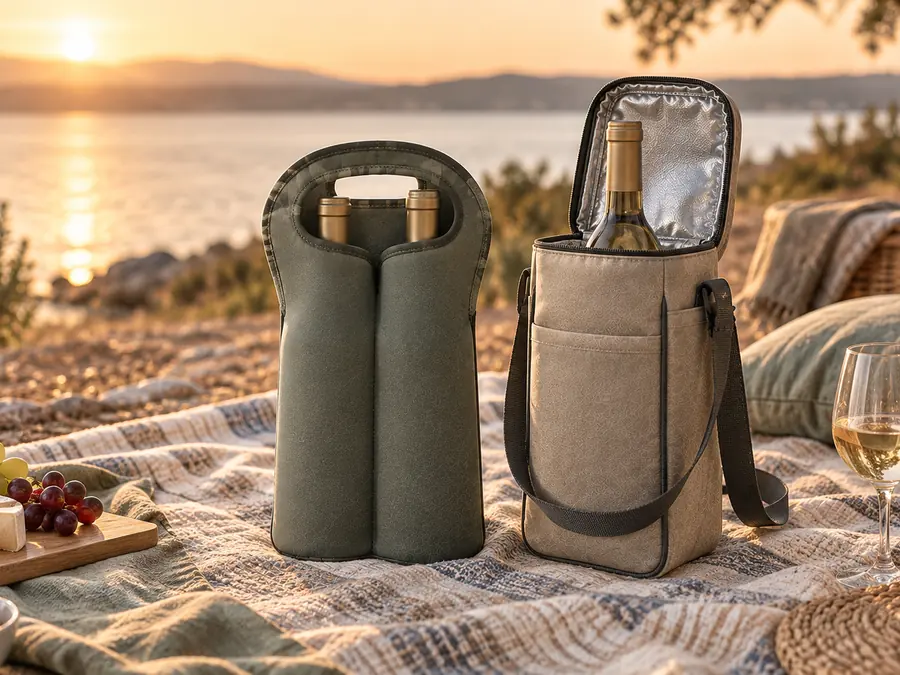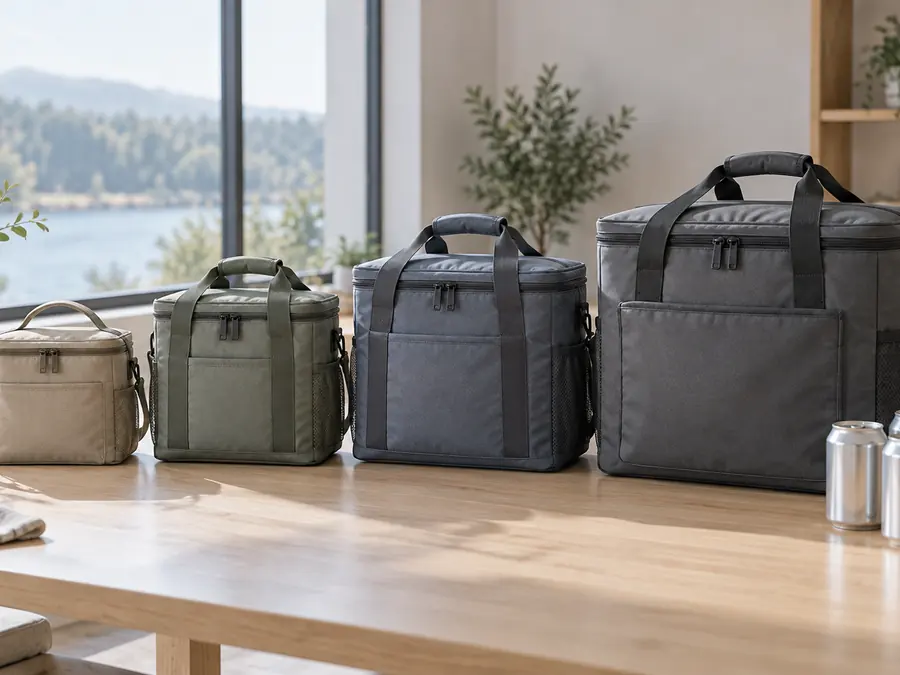
A small cooler bag usually holds 6–12 standard 12 oz cans (about 5–10 litres), a mid-size bag 18–24 cans (12–20 litres) and a big cooler bag 30 cans or more (25 litres and up). One US quart is about 0.95 litres. Always size from internal dimensions: insulation and ice packs take up a large share of the outer volume.
"Small cooler", "mini cooler" and "big cooler" are the most searched size words in the category, and none of them has a fixed meaning. One brand's small cooler holds six cans; another's holds twenty. This guide converts the three ways sizes are quoted (can count, litres and quarts) into one consistent scale, and shows why the outer dimensions on a spec sheet overstate what actually fits inside.
What size is a small cooler?
In soft cooler bags, a small cooler normally means a capacity of 6 to 12 standard 12 oz cans, or roughly 5 to 10 litres of usable space.
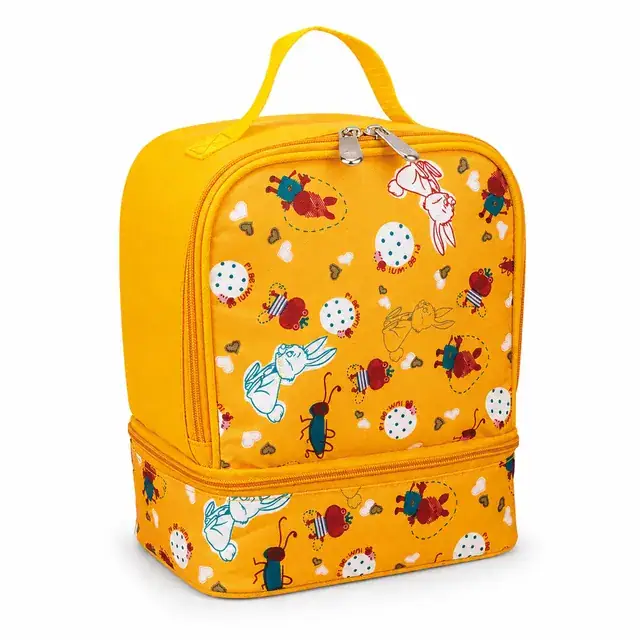
Below that sits the mini cooler: a 4-can or 6-can bag, or a lunch-sized cooler around 3 to 6 litres, often used for one person's drinks and a snack. Above it, mid-size bags hold 18 to 24 cans, and a big cooler bag starts around 30 cans. Those bands are not an industry standard, but they match how shoppers use the words, so they are a sensible basis for naming a range.
Cooler sizes at a glance: cans, litres and quarts
The table below uses a standard 12 oz (355 ml) can, about 6.6 cm across and 12.2 cm tall, and one US quart at 0.946 litres. Usable capacity assumes room for at least one gel pack.
| Size name | Cans (12 oz) | Usable litres | Approx. US quarts | Typical use |
|---|---|---|---|---|
| Can sleeve | 1 | under 0.5 | under 0.5 | One drink kept cold in the hand |
| Very small / mini | 4–6 | 3–6 | 3–6 | Lunch, one person's drinks |
| Small cooler | 9–12 | 7–10 | 7–11 | Commute, travel, two people |
| Medium | 18–24 | 12–20 | 13–21 | Picnic, beach, family day out |
| Large | 30–40 | 22–35 | 23–37 | Camping, group events |
| Extra large | 45+ | 40+ | 42+ | Bulk shopping, catering, deliveries |
So a 9 quart cooler is about 8.5 litres (a small cooler by this scale) and a 15 qt cooler is about 14 litres (the lower end of medium). When a listing says "12 can cooler", treat it as a small cooler; "30 can cooler" is the entry point of large.
How many cans fit in a cooler? The arithmetic
Each can occupies a footprint of about 6.6 × 6.6 cm and stands 12.2 cm tall, so its bounding box is roughly 0.53 litres. Cans do not tessellate perfectly, and you need room for cold packs, so the working rule is 0.6–0.7 litres per can without ice and 0.9–1.0 litres per can with gel packs or loose ice.
Worked examples:
- 6 cans in a 2 × 3 grid need an internal floor of about 13 × 20 cm and 12–13 cm of height: about 3.2 litres before ice. A 6 can cooler bag is therefore a lunch-sized bag.
- 12 cans in a 3 × 4 grid need about 20 × 27 cm and one layer of height: about 6.4 litres. Add a gel pack on top and you need 8–10 litres.
- 24 cans in two layers of 3 × 4 need about 20 × 27 × 25 cm: about 13 litres, or 16–20 litres with cold packs.
- 30 cans in two layers of 3 × 5 need about 20 × 33 × 25 cm: about 16 litres, or 22–25 litres with cold packs.
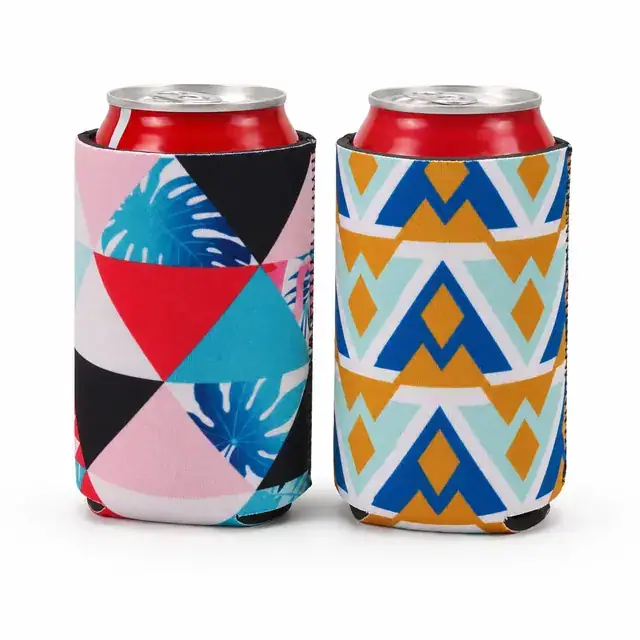
Bottles change the picture. A 75 cl wine bottle is around 30 cm tall, so a small cooler that holds 12 cans may not close over a single bottle. That is why bottle carriers are a separate shape; our wine bottle and can holder range covers that end, down to a single neoprene can cooler.
Why outer dimensions overstate cooler capacity
Insulation sits inside the outer dimensions, so every millimetre of foam is space that cannot hold food. Thicker walls keep things cold longer but reduce capacity, and buyers comparing spec sheets often miss this.
Take an outer size of 33 × 21 × 40 cm, which is 27.7 litres of external volume. With a 10 mm foam wall on every side, the internal space becomes about 31 × 19 × 38 cm, or 22.4 litres: roughly a fifth of the volume gone. With a 20 mm wall it drops to about 29 × 17 × 36 cm, or 17.7 litres, and you have lost more than a third. Add two gel packs and a zip gusset, and the number of cans falls again.
That is the trade-off behind every size decision. Our published design data: a 10 mm EPE foam wall with a welded leak-proof liner and two gel packs holds refrigerated food below 8 °C for roughly 6–8 hours at 25 °C ambient. A 15–20 mm wall, a zip storm flap and a light outer colour extend that, at the cost of capacity or a bigger bag. These are design ranges rather than guarantees; we run a timed temperature test on an approved sample on request. The construction side is explained in our cooler bag insulation guide.
Choosing the right size: small, mini or big cooler?
Match the size to the trip length and the number of people, then check that the shape fits the tallest item. A cooler that is too big for its load warms up faster, because air is a poor cold store compared with the food itself.
- Mini cooler bag (3–6 litres): one person, lunch or a few drinks, a few hours. Fits in a tote or under a desk. Example: our 21 × 12 × 25 cm mini cooler bag in 600D polyester with a PEVA lining.
- Small cooler bag for travel (7–12 litres): two people, a car journey or a day at work. Look for a shoulder strap and a flat base that sits in a footwell.
- Medium (12–22 litres): family picnic or beach. Two handles plus a strap; a front pocket for dry items keeps condensation off phones and keys.
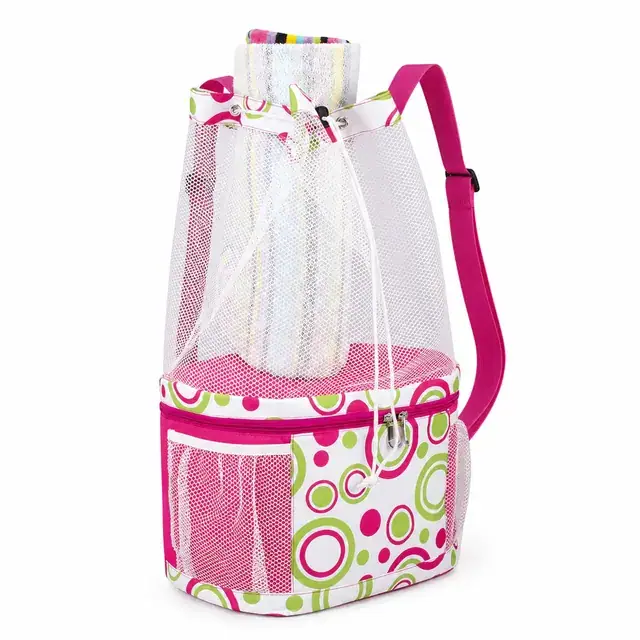
- Big cooler (22 litres and up): camping and group events. Weight matters here: 30 full cans weigh more than 10 kg before ice, so a large insulated bag needs reinforced handles and a stiff base, or a backpack harness. Examples include a 33 × 21 × 40 cm picnic cooler in 1680D/600D and a 53 × 22 × 51 cm insulated picnic backpack.
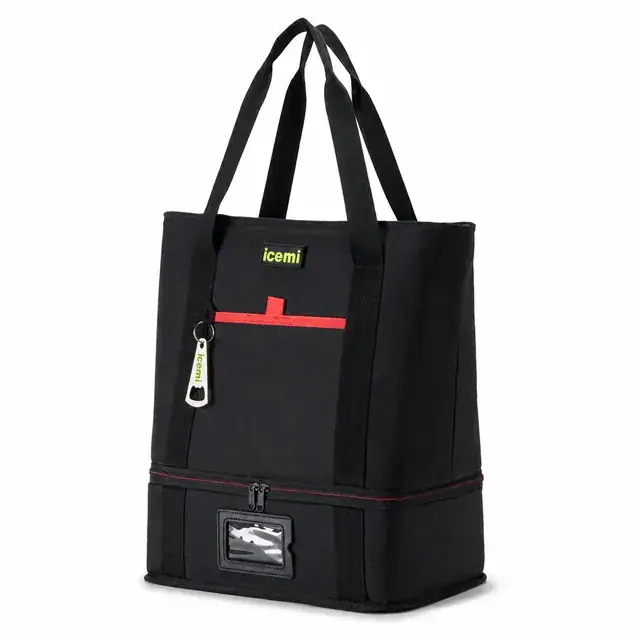
- Extra large insulated tote: grocery runs and bulk shopping, where the bag carries frozen goods home rather than keeping them cold all day. Thin walls, big opening, strong handles.
A note on hard coolers: if you are searching for a small cooler chest with rigid walls, that is a moulded product we do not make. Our range is soft-sided, which suits retail and promotional programmes better because the bags fold flat and ship more units per carton.
How to specify cooler size in a product brief
When you brief a manufacturer, state capacity in three ways so there is no argument at sample stage. These steps keep the sample, the packaging and the listing consistent:
- Give outer dimensions in centimetres, with a tolerance (±1 cm is typical for soft goods).
- Give the foam thickness and type, for example 10 mm EPE, so internal space can be calculated.
- State the claimed capacity in litres and cans, and say whether ice is included in the can count.
- Name the tallest item the bag must hold upright, such as a 1.5 litre bottle or a wine bottle.
- Ask for a fill test on the counter sample: load the claimed number of cans plus gel packs and close the zip. If it does not close easily, the claim is wrong.
- Check carton maths: how many units fit an export carton folded, because a bigger cooler can double your freight cost per unit.
If your marketing copy will say "holds 24 cans", it should be true on the production bag, not just the prototype. We include the fill check in pre-shipment inspection when the claim is printed on packaging.
Building a size range for retail or promotion
Most successful ranges use three sizes, not six. A typical ladder is a mini or lunch bag, a 12–18 can small cooler and a 30-can large bag, with the same fabric, colourway and logo position across all three so they merchandise as a family.
From our catalogue of 154 cooler and insulated models, that ladder can usually be built from tooled patterns, which keeps the MOQ at 500 pieces per colour for each size. New sizes or patterns start at 1,000 pieces per colour. Browse the outdoor and picnic cooler bags for mid and large sizes, then send us the capacities you want to hit and we will propose the closest tooled models with their internal dimensions.
Frequently asked
What is a good size for a small cooler?
For one or two people on a day trip, a small cooler bag of 7 to 10 litres usable capacity works well. That holds around 9 to 12 standard cans with a gel pack. Check the internal height too: if you carry bottles, make sure the tallest one stands upright with the lid closed.
How many litres is a 12 can cooler?
Twelve 12 oz cans take up about 6.4 litres in a tight 3 × 4 grid. Allowing for a gel pack or ice, a 12 can cooler needs roughly 8 to 10 litres of internal space. If the spec sheet quotes only outer dimensions, subtract the wall thickness on every side before calculating.
How many quarts is a 30 can cooler?
A 30 can cooler needs roughly 22 to 25 litres of usable space with cold packs, which is about 23 to 26 US quarts. One quart is 0.946 litres, so divide litres by 0.946 to convert. Expect the outer dimensions to be noticeably larger because insulation sits inside them.
What is the difference between a mini cooler and a lunch bag?
There is a lot of overlap. A lunch bag is shaped for food containers, often wider than it is tall, with a single compartment and handles. A mini cooler is usually taller and boxier, shaped for cans or bottles, and may add a shoulder strap. Both typically hold 3 to 6 litres.
Does a bigger cooler keep things cold longer?
Only if it is filled. Thicker walls and a full load hold temperature longer; a large bag that is half empty warms faster because the air inside holds little cold. Choose the smallest size that fits your load, then add gel packs to fill gaps.