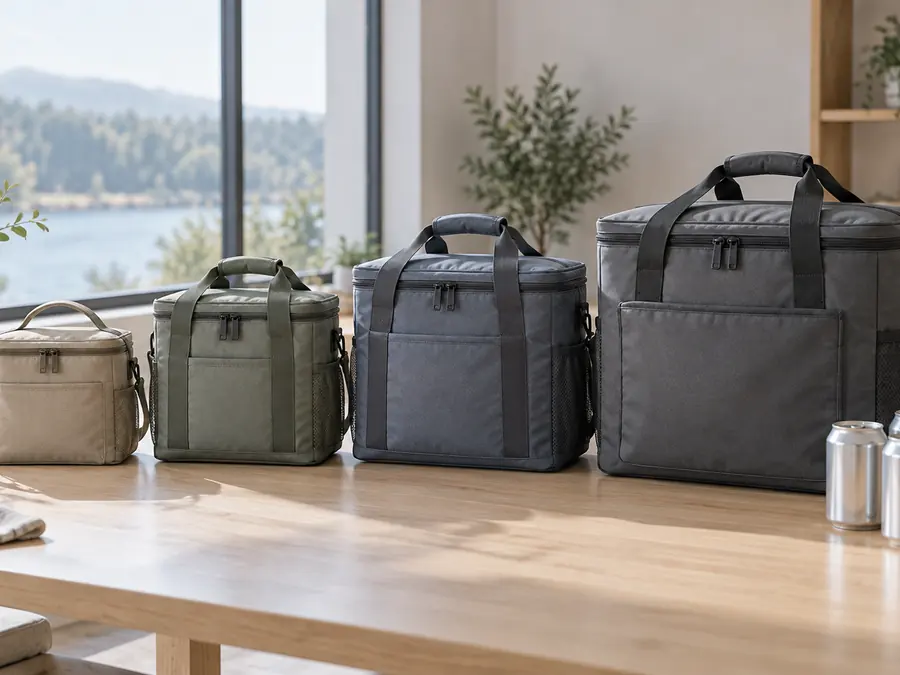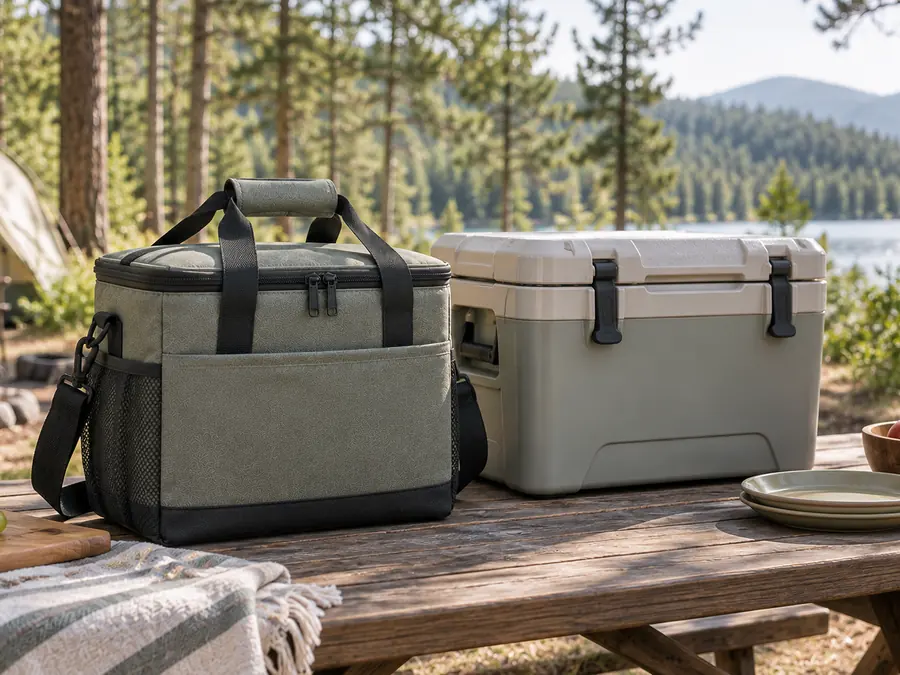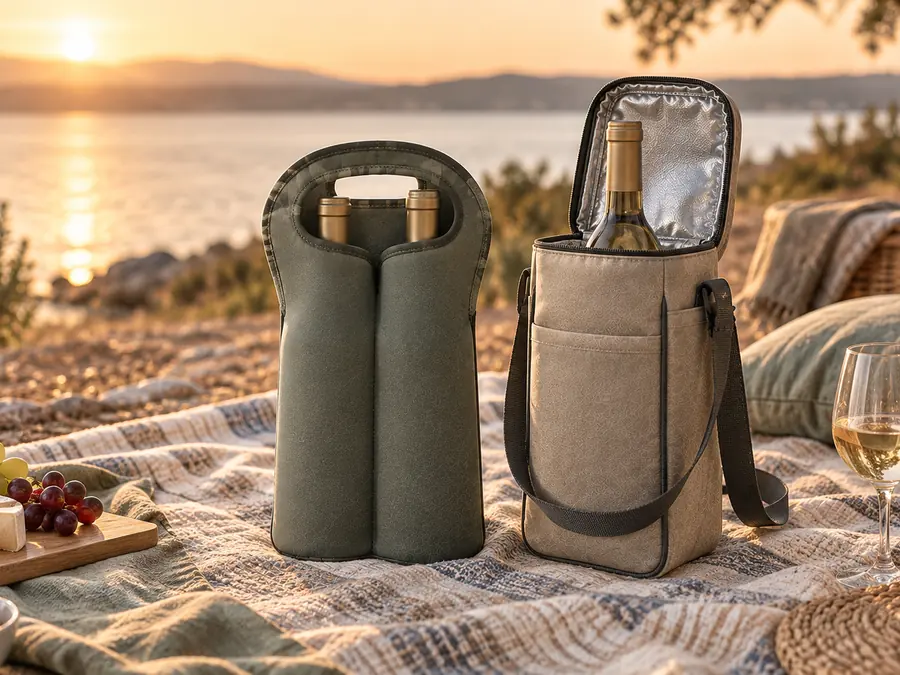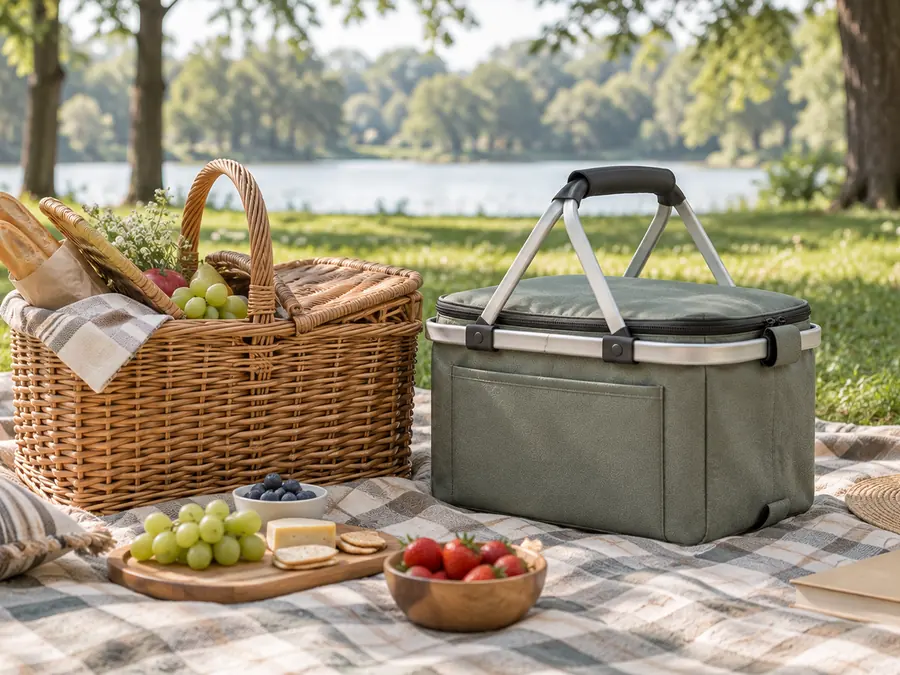
A traditional picnic basket looks good and carries plates and glasses, but it does not keep food cold. An insulated picnic basket or picnic cooler bag does, and a picnic backpack frees both hands for walking. For most retail ranges, a collapsible insulated basket plus a picnic backpack set covers what shoppers want: cold food, easy carrying and a giftable look.
The picnic basket has a strong image — wicker, gingham, a set of plates strapped into the lid. What shoppers actually carry to the park, beach or festival is increasingly something else: an insulated picnic basket, a cooler tote or a picnic backpack. This guide compares the main picnic formats from a range-planning point of view, so buyers can decide which to stock, what features earn their place, and where a picnic basket set still makes sense.
For transparency: Eggroll Bags supplies soft insulated picnic bags, cooler baskets and picnic backpacks. We do not make rigid wicker hampers. Where the guide discusses them, it is to help you position a range, not to sell one.
Picnic basket or picnic cooler bag: which is better?
If the picnic includes anything perishable, a picnic cooler bag or insulated picnic basket is the better tool, because an open-weave wicker basket offers essentially no insulation. A traditional basket wins only on looks and on carrying rigid tableware.
The practical differences come down to four things: temperature, weight, storage at home and how the bag is carried. A wicker hamper with a full picnic set is heavy before any food goes in, does not fold, and is carried by hand. A soft picnic cooler bag weighs a fraction of that, folds flat in a cupboard, and keeps food cold for a meaningful part of the day. As a reference from our published design data, a 10 mm EPE foam wall with a welded leak-proof liner and two gel packs holds refrigerated food below 8 °C for roughly 6–8 hours at 25 °C ambient. That is a design range, not a guarantee, but it is a different category of performance from an uninsulated basket.
The main picnic bag formats compared
Most picnic gear on shelves falls into five formats. Each one serves a different occasion and price point.
| Format | Keeps food cold? | Carry | Folds flat? | Typical shopper |
|---|---|---|---|---|
| Wicker picnic basket / hamper set | No, unless a cooler insert is added | Hand, heavy | No | Gift buyers, occasion picnics |
| Insulated picnic basket (soft, framed) | Yes | Hand, two handles | Often collapsible | Families, park and garden picnics |
| Picnic cooler tote / picnic bag | Yes | Shoulder or hand | Yes | Everyday, beach, short outings |
| Picnic backpack (with or without set) | Yes, in the cooler compartment | Two shoulders, hands free | Mostly | Walkers, couples, festival-goers |
| Chair or stool with built-in cooler | Yes, small volume | Shoulder or backpack straps | Folds as a chair | Fishing, camping, beach, sports sidelines |
The interesting part for range planning is that the cooler formats now do most of the jobs the basket used to do, and add cold. The basket’s remaining advantage is presentation, which a well-designed soft basket can largely match.
Insulated picnic baskets and collapsible picnic baskets
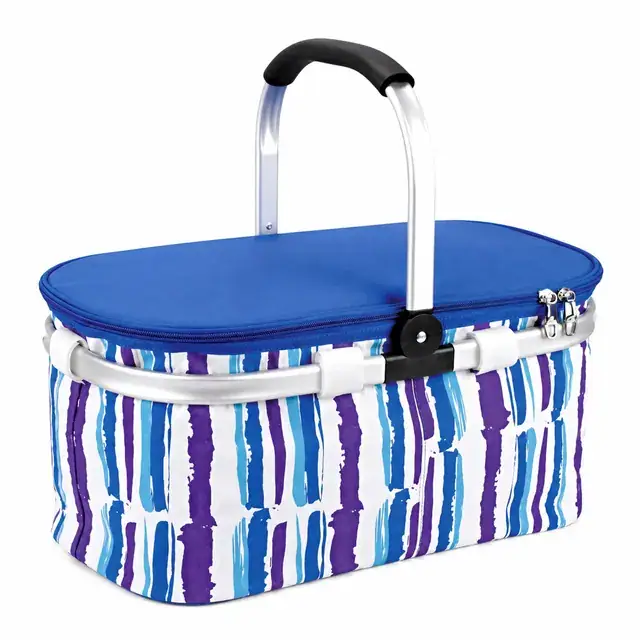
An insulated picnic basket is a soft cooler built in a basket shape: wide and open at the top, usually with a frame or stiffened walls and two handles. It is the closest replacement for a traditional basket and the easiest format for shoppers to understand.
The features that matter most are an internal frame or board that keeps the shape upright when loaded, a zip lid rather than an open top, and a collapsible build so it stores flat. A collapsible picnic basket or collapsible picnic hamper that folds to a few centimetres is a strong selling point for apartment dwellers and car-boot storage.
Our cooler baskets range covers this format, from compact market-style baskets to larger camping baskets. A good starting point is the folding portable picnic basket in 600D polyester with a PEVA lining, 42×22×22 cm, which takes a family lunch and folds away afterwards.
Picnic backpacks: for two, for four and for walkers
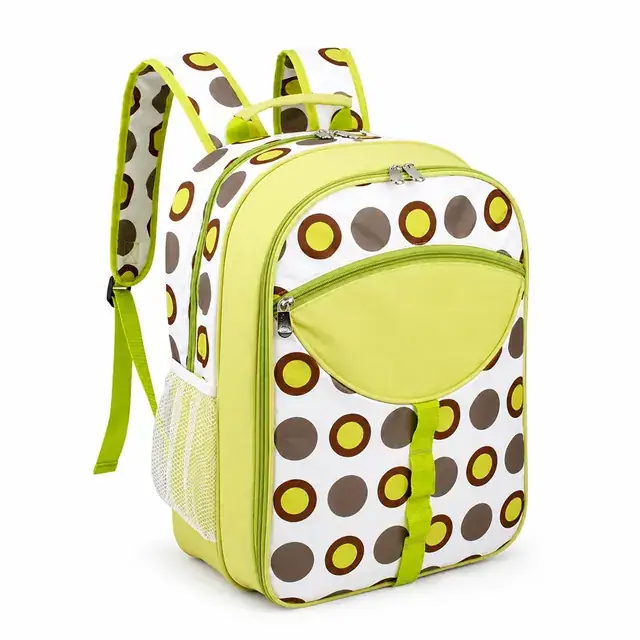
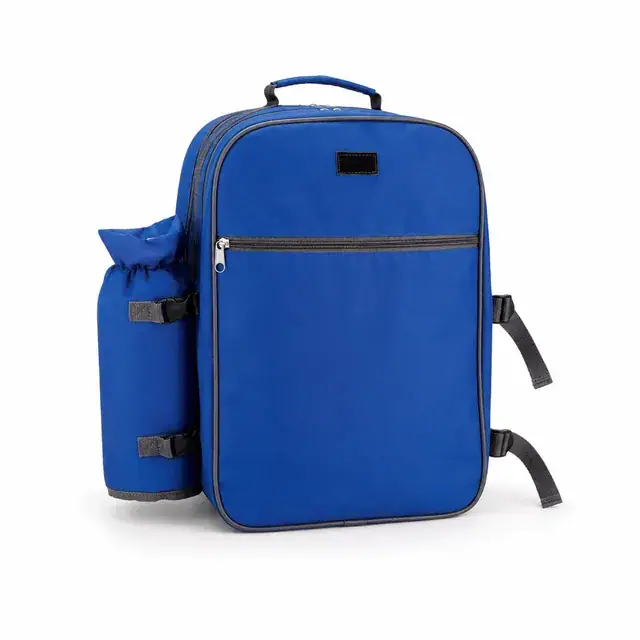
A picnic backpack puts the cooler compartment and the picnic accessories on the shopper’s back, so both hands are free. It is the format that has gained most ground with people who walk or cycle to their picnic spot.
The usual layout is an insulated lower or main compartment for food and drinks, an upper or front section with straps or pockets for plates, cutlery and glasses, and often a side bottle holder and blanket straps. When shoppers search for a picnic backpack for 2 or a picnic backpack for 4, they are really asking about two things: how many place settings are included, and whether the cooler volume matches. A two-person set needs a cooler compartment that takes two meals and a bottle; a four-person set needs noticeably more volume and stronger shoulder straps.
Relevant models include our picnic backpack with utensil storage (600D polyester and PEVA, 29×18×42 cm) and the insulated picnic bag with tableware set. Tableware contents and quantities are confirmed at quotation, so the set can be matched to your target price.
Picnic accessories that earn their place
Accessories add perceived value cheaply, but each one adds cost, weight and a compliance check. Choose the ones shoppers actually use.
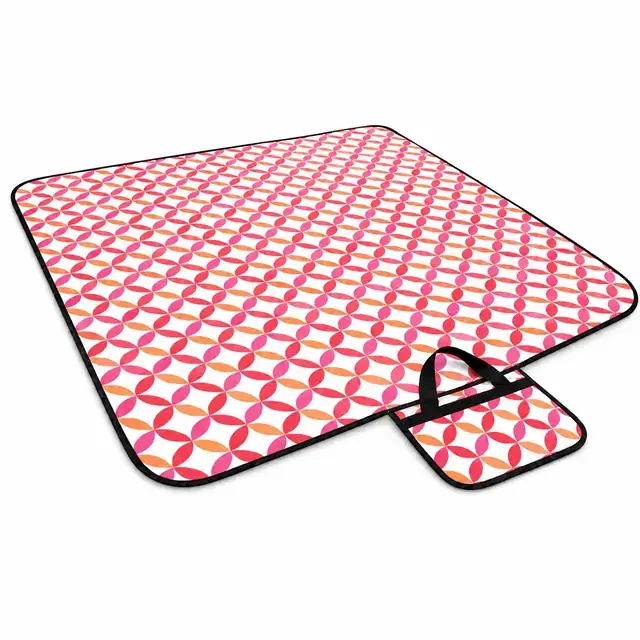
- Picnic blanket with a waterproof backing. The most-used accessory. A fleece blanket that rolls up with a carry strap pairs well with any cooler; see our 150×135 cm geometric fleece picnic blanket.
- Bottle sleeve or wine pocket. An insulated slot for a bottle is a strong reason to choose one picnic bag over another.
- Cutlery and plate straps. Elastic loops or a zip pocket keep a picnic set together. Any item that touches food needs food-contact testing for the target market.
- Removable ice pack pocket. Keeps the cold source where it is needed and stops it sliding around.
- Personalised details. Embroidery, a woven label or a printed lining turns a standard picnic bag into a personalized picnic basket for gifting or a branded promotional item.
How to plan a picnic range for retail
A tight picnic range is usually three to five products across price points rather than one hero item. Work through these steps when building it:
- Pick the occasions. Park and garden, beach, walking and festivals each favour a different format.
- Set price tiers. An entry picnic tote, a mid-price insulated basket and a premium backpack set is a common structure.
- Choose a shared colour story. Specify fabric colours in Pantone TCX or TPG and approve lab dips, so the range looks like one family on shelf.
- Decide the decoration. Sublimated full-surface prints suit seasonal patterns; embroidery and woven labels suit a contemporary picnic basket look.
- Specify insulation. State wall thickness and liner type. A welded liner is worth it for anything carrying ice or drinks.
- Order counter samples. Samples take 7–12 days, and the fee is credited against bulk.
- Plan the calendar. Bulk runs 25–35 days after sample approval, plus 28–40 days sea freight to North Europe or the US East Coast. For a spring launch, place orders well before peak season (July–October), which adds about a week.
Our picnic and camping cooler range project shows how this works on a real programme built for a full day outdoors.
What does a custom picnic bag cost and what is the MOQ?
For a catalogue model, the minimum order is 500 pcs per colour; for a new pattern or a custom-dyed colour it is 1,000 pcs per colour. Unit price depends mainly on size, fabric, insulation thickness and how many accessories are included.
The biggest cost levers in a picnic set are the accessories rather than the bag. Every plate, glass and cutlery item adds sourcing, testing and packing time. If you are aiming for affordable picnic baskets at an entry price point, a well-made insulated tote with a blanket strap often sells better than a cheap basket stuffed with low-grade tableware. If you are aiming at a premium gift, a framed insulated basket with a fully fitted set justifies the price.
Payment terms are 30% T/T deposit and 70% against copy of B/L, with L/C at sight available above USD 30,000. We ship EXW, FOB Shanghai or Ningbo, CIF or DDP.
Quality points to check on picnic bags
Picnic bags are loaded unevenly and carried by one handle more often than designers expect. On every order we run inline checks at 20% and 80% of production and a pre-shipment inspection to ISO 2859-1 General Level II, AQL 2.5 major and 4.0 minor. For picnic formats the tests that matter most are the handle pull (5 kg for 60 seconds), the liner leak test (1 L of water for 10 minutes), the zip cycle test and a foam thickness cut test. Frames on collapsible baskets also get checked for smooth folding before packing.
To discuss a picnic basket set, cooler basket or picnic backpack range, send us your brief; you will have a written reply within one working day.
Frequently asked
Are insulated picnic baskets worth it?
For anyone carrying perishable food or cold drinks, yes. An open wicker basket does not insulate, so food warms to air temperature quickly. An insulated picnic basket with a foam wall and a sealed liner keeps food cold for several hours, folds flat for storage and weighs much less than a traditional hamper with fixed tableware.
What size picnic backpack do I need for two people?
A picnic backpack for two needs a cooler compartment that takes two meals, a bottle and an ice pack, plus space or straps for two place settings. Compare the cooler compartment, not just the overall bag size. For four people, look for a larger cooler compartment, wider padded straps and a set with four of each item.
What should a picnic set include?
A practical picnic set includes plates, cutlery, cups or glasses, napkins and a bottle opener, plus an insulated compartment and a blanket. For retail, fewer good-quality items usually sell better than many low-grade ones. Anything that touches food needs food-contact testing for the market where it will be sold.
Can you make a custom picnic basket with our logo?
Yes, on soft insulated baskets, cooler totes and picnic backpacks. Logos can be screen printed, heat transferred, embroidered, woven into labels or applied as silicone or PU patches. The MOQ is 500 pcs per colour on a catalogue model and 1,000 pcs per colour for a new pattern or custom-dyed colour.
Do you make wicker picnic hampers?
No. We supply soft insulated picnic bags, collapsible cooler baskets, picnic backpacks and picnic blankets, but not rigid wicker hampers. Many retailers pair a soft insulated basket with a blanket to give the same occasion appeal with cold storage, lower weight and flat-pack shipping, which also reduces freight cost.