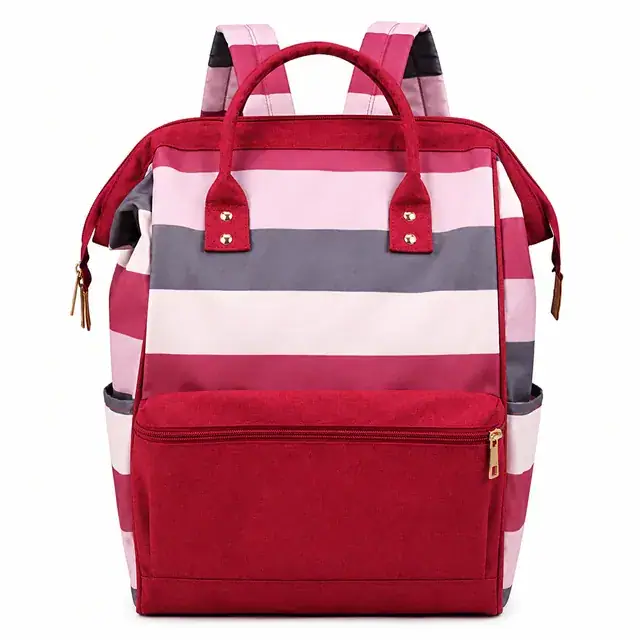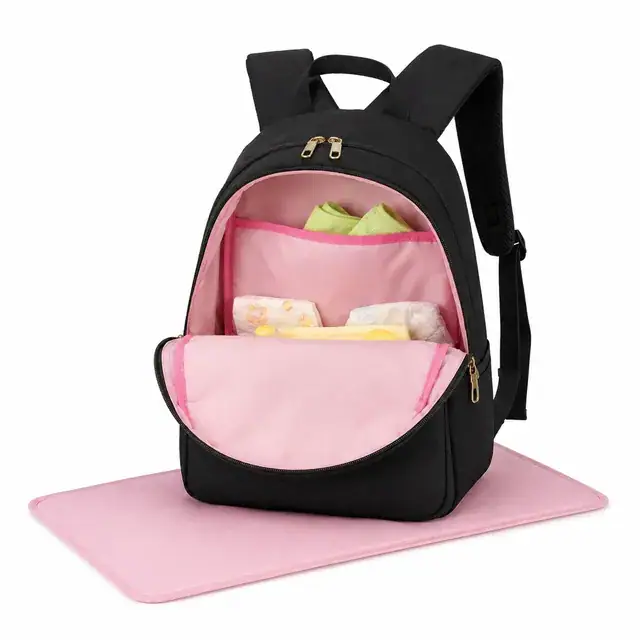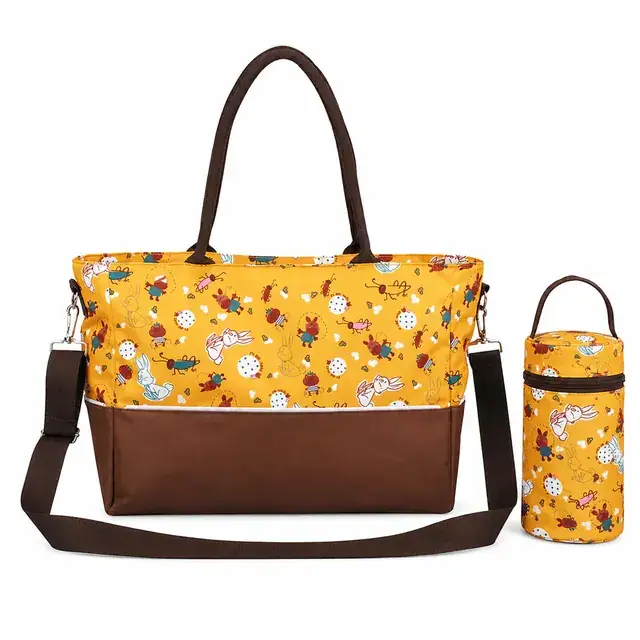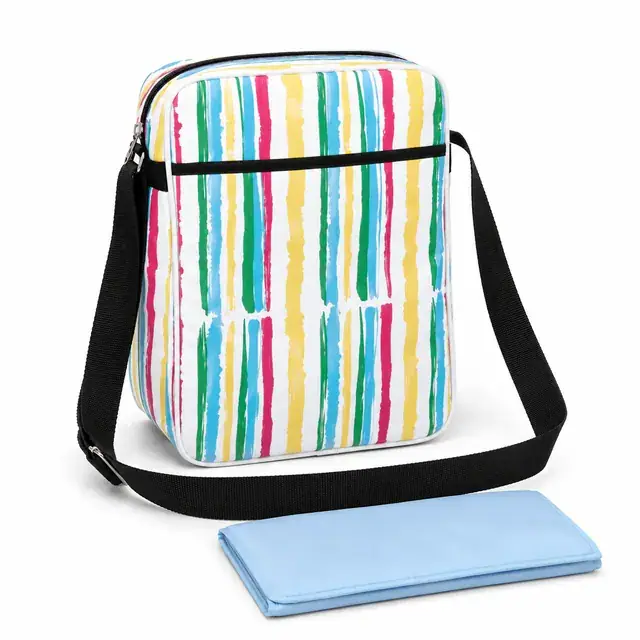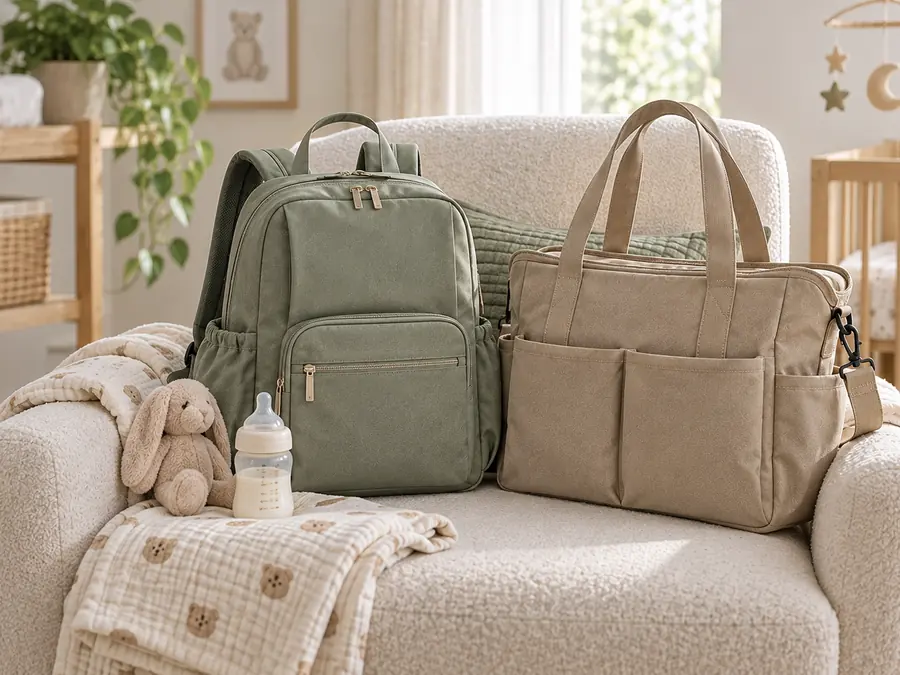
A diaper bag backpack is the better choice for most parents because it spreads the weight over both shoulders and leaves both hands free for a baby, buggy or car seat. A diaper bag tote is easier to search, looks more like a handbag and suits short trips. The best diaper bags of either style have a wide opening, wipe-clean lining, insulated bottle pockets and a changing pad.
Ask parents what they want from a nappy bag and the answers are remarkably consistent: hands free, find things fast, wipe it clean, and do not look like a nappy bag. Whether a diaper bag backpack or a tote is the better choice depends on which of those matters most on a typical day. This guide from the Eggroll Bags export desk compares the two styles, lists the features that genuinely get used, and sets out how brands specify the best diaper bags for their own range.
Diaper bag backpack vs tote: the short comparison
A diaper bag backpack wins on comfort and free hands; a tote wins on quick access and looks. Most parents who carry a baby, push a buggy or travel choose a backpack, while a tote suits short outings and parents who want something that passes as a handbag.
| Factor | Diaper bag backpack | Diaper bag tote | Crossbody or messenger |
|---|---|---|---|
| Hands free | Yes, both hands | No, unless worn on a long strap | Yes, one shoulder |
| Weight distribution | Even across both shoulders | One shoulder or one arm | One shoulder |
| Speed of access | Good with a wide top opening | Best: open top, everything visible | Good for small loads |
| Typical capacity | Medium to large | Medium to large | Small |
| Looks | Sporty to sleek | Handbag-like, easiest to make designer | Casual |
| Hangs on a buggy | With stroller straps or hooks | Yes, by the handles | Yes |
| Best for | Babies and toddlers, travel, two-parent use | Short trips, appointments, office-to-nursery | Quick errands, a mini diaper bag |
Why a diaper bag backpack suits most parents
Parents rarely have a free hand. A backpack keeps both hands available for lifting a baby, folding a buggy or fitting a car seat, and spreading the load over two shoulders is more comfortable when the bag holds bottles, spare clothes and a day's supplies.
A backpack is also gender-neutral and easy to share between parents, which is one reason a diaper backpack is often the first choice as a gift. The weakness of many backpack designs is access: a narrow zip top turns into a deep, dark well. The best diaper bag backpack solves that with a wide, frame-style opening that stays open while you search, plus a side or back zip so you can reach the wipes without taking the bag off.
From our catalogue, the wide-open baby diaper backpack (600D polyester, 26 × 17 × 39 cm) is built around that kind of opening, and the canvas baby diaper bag backpack (30 × 12 × 43 cm) offers a slimmer profile.
When a diaper bag tote is the better choice
A diaper bag tote is better when speed of access and appearance matter more than carrying distance. With an open top, everything is visible at a glance, and a structured tote reads as a handbag rather than baby gear, which is why most designer diaper bags are totes.
Totes work well for short trips by car, doctor's appointments and parents moving between office and nursery. The trade-off is weight on one shoulder and one hand occupied. A good tote diaper bag mitigates that with a detachable crossbody strap and stroller clips, so it can be worn hands-free or hung on a buggy when needed.
Our luxury baby diaper tote with bottle holder (600D polyester with PEVA lining, 40 × 18 × 29 cm) is a catalogue example. For a small diaper bag or mini diaper bag on short errands, the multifunctional baby diaper crossbody bag (27 × 13 × 35 cm) carries the essentials without the bulk.
The features parents actually use
The features that earn their place are the ones used several times a day. Anything else adds weight, cost and pockets that collect crumbs.
- A wide opening. Being able to see inside matters more than the number of pockets.
- A wipe-clean lining. Light-coloured, water-resistant lining shows contents clearly and wipes clean after a leak or spill.
- Quick-access wipes pocket. On the outside or the top, reachable one-handed.
- Insulated bottle pockets. Two sleeves with foam or foil insulation keep bottles warm or cool for a while and stop condensation soaking everything else.
- A changing pad. A padded, wipeable fold-out pad turns any surface into a diaper bag with changing station.
- A separate wet or dirty compartment. For soiled clothes or used bibs, with a water-resistant lining.
- Stroller straps or clips. So the bag hangs from the buggy handle securely.
- A small zipped pocket for parent items. Phone, keys and cards, kept away from the baby supplies.
Features that tend to go unused: very large numbers of small elastic pockets, which make a bag heavier and items harder to find, and built-in gadgets that need batteries.
Materials for designer, leather and water-resistant diaper bags
The shell fabric sets the look and the cleaning routine. For a designer or luxury diaper bag, the material is the first thing a buyer notices, so it deserves as much attention as the pocket plan.
| Material | Look | Care | Typical positioning |
|---|---|---|---|
| 600D polyester | Clean, sporty | Wipe or sponge clean; can be coated for water resistance | Everyday backpacks, value ranges |
| Microfiber | Soft, matte | Wipe clean | Totes, messengers, mid-range |
| Canvas | Natural, relaxed | Spot clean; heavier when wet unless coated | Lifestyle backpacks and totes |
| PU or vegan leather | Structured, premium | Wipe clean | Designer diaper bags, leather-look totes |
| RPET 600D | As polyester | As polyester | Sustainability-led ranges with a GRS-supported claim |
A water-resistant diaper bag uses a coated shell and lining; truly waterproof needs sealed seams, which most parents do not need. Colour matters commercially too: neutral black, grey, sage and sand sell to every parent, while a pink diaper bag or a blue diaper bag for a boy narrows the audience to gift buyers. See our bag fabric guide for more on deniers and coatings.
For brands: specifying a private label diaper bag
To build your own diaper bag, start from a tooled base model in the style that fits your customer, then change fabric, colour, hardware, pocket details and branding. Our diaper and baby bag range covers backpacks, totes, messengers, a Boston bag and an insulated multi-purpose tote.
- Choose the style: backpack, tote or crossbody, based on your channel and price point.
- Fix the pocket map: list every pocket, its position and closure, and the size of the bottle sleeves.
- Specify materials: shell, lining colour, foam in the back panel and bottle sleeves, changing pad fabric and fill.
- Set colours and decoration: Pantone TCX or TPG for fabric, Pantone C for print; embroidery, woven labels, PU patches or heat transfer for the logo.
- Plan testing: product reports such as REACH, Proposition 65 and phthalates are issued per model and market in the buyer's name. Ask which apply to components a baby may touch, such as a changing pad, and to insulated bottle linings.
- Approve a counter sample: seven to twelve days, with the fee credited against bulk.
- Bulk and inspect: 25 to 35 days after sample approval, inline checks at 20% and 80%, pre-shipment inspection at AQL 2.5 major and 4.0 minor, with zip cycle, handle pull and print rub tests.
Catalogue models start at 500 pieces per colour, or 1,000 per colour for a new pattern or custom-dyed colour. Send your brief, the style and the quantity per colour through the quote request form.
Frequently asked
Is a backpack or tote better for a diaper bag?
For most parents, a backpack is better: it leaves both hands free and spreads the weight across both shoulders, which helps when carrying a baby or pushing a buggy. A tote is better for short trips and quick access, because the open top shows everything at once, and it looks more like a handbag. Many households end up with one of each.
What should I look for in the best diaper bag?
Look for a wide opening you can see into, a light wipe-clean lining, a one-handed wipes pocket, two insulated bottle sleeves, a changing pad, a separate wet compartment and stroller straps. Comfortable padded straps matter on a backpack; a detachable crossbody strap matters on a tote. Fewer, well-placed pockets beat dozens of small ones.
Can a designer bag be used as a diaper bag?
It can, but most designer handbags lack a wipe-clean lining, insulated bottle pockets and a changing pad, and spills can mark the inside. Designer diaper bags solve this by combining a handbag-style tote shape and premium materials such as PU or vegan leather with a practical interior. A pouch organiser inside a regular tote is a middle option.
What size should a diaper bag be?
For a day out with one baby, a medium bag around the size of a school backpack holds nappies, wipes, two bottles, a change of clothes and a changing pad. A small or mini diaper bag suits quick errands with just the essentials. For travel or two children, choose a larger backpack or tote with a separate wet compartment.
Are diaper bags tested for safety?
Testing depends on the market and the components. Common product reports include EU REACH, California Proposition 65 and phthalates, and insulated bottle linings can be covered by food-contact migration testing. Reports are issued per model and market in the buyer's name, so ask the supplier which reports cover the specific bag and every country it will be sold in.