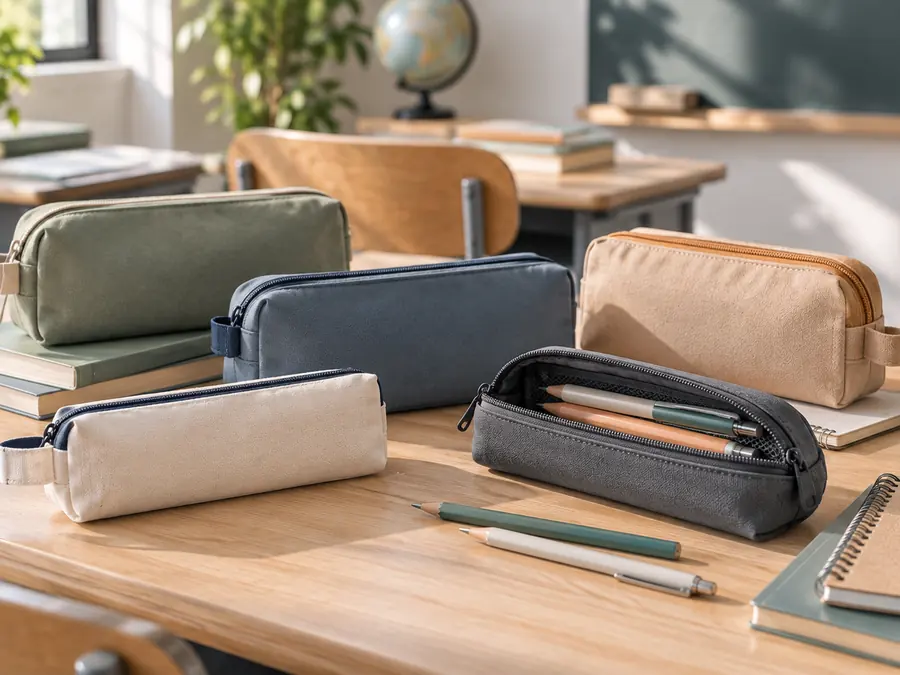
A pencil case is any container for pens and stationery; a pencil pouch is the soft, zippered version, usually fabric. Soft zippered pouches suit most students and promotional programmes because they are light, printable and cheap to ship. Clear pouches suit exam rooms, compartment cases suit art kits, and hard boxes protect delicate tools. For children, choose materials that pass the relevant market tests.
The pencil case is one of the smallest items in a back-to-school range and one of the most argued about. Students want a cute pencil case or a funny teen pencil pouch; parents want one that lasts the year; retailers and promotional buyers want it to print well, pack flat and pass testing. This guide covers the main types of pencil case and pencil pouch, the materials and zips that decide how long they last, and what to specify when you order custom or bulk pencil cases.
Pencil case vs pencil pouch: what is the difference?
“Pencil case” is the umbrella term for anything that holds pens and stationery. A pencil pouch, or pencil bag, is the soft, zippered fabric version; a pencil case box is the rigid kind with a hinged lid.
In practice, most of the market has moved to soft formats. A zippered pencil case in polyester or canvas weighs very little, flexes to fit into a full backpack and takes printing and embroidery well. Hard cases still have a place for geometry sets, calligraphy pens and art tools that need protection, but they are bulkier to ship and harder to decorate.
Types of pencil case compared
There are five common formats. The right one depends on the user’s age, what they carry and where the case will be sold.
| Type | Typical materials | Strengths | Limitations | Best for |
|---|---|---|---|---|
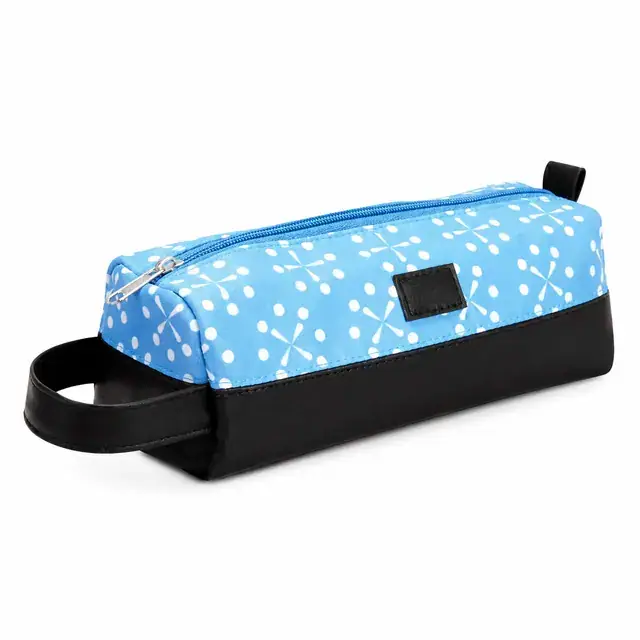
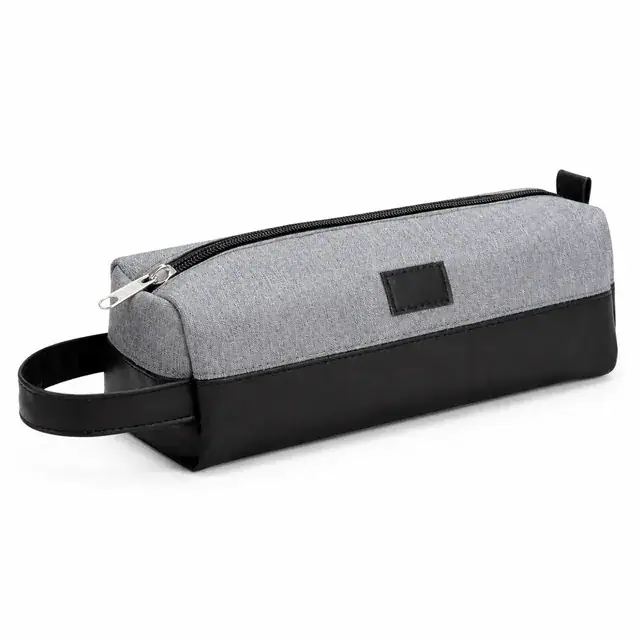
| Soft zippered pencil pouch | 600D polyester, microfiber, canvas | Light, flexible, easy to print, flat-packs | Little crush protection | Everyday school use, promotional giveaways |
| Clear pencil pouch | Transparent PVC or TPU with fabric trim | Contents visible; often requested for exams | Can crack in cold if the film is thin; scratches show | Exam stationery, travel, quick checks |
| Compartment pencil case | Polyester with internal dividers, elastic loops | Organised, holds many items | More parts, higher cost | Art kits, older students, large pencil case needs |
| Box-style soft case | Fabric over a stiffened board | Stands upright, holds shape on a desk | Bulkier; more cartons per order | Desk organisers, teens |
| Hard pencil case / pencil case box | Moulded plastic or metal | Protects delicate tools | Heavy to ship; decoration limited | Geometry sets, technical pens |
Our catalogue pencil pouches are soft fabric styles, and clear or compartment versions can be developed to brief. Rigid plastic or metal pencil case boxes are not part of our catalogue; if you need one alongside a soft range, mention it in your brief and we will tell you honestly whether it fits our partner factories.
Best materials for a pencil pouch
For a pencil pouch that survives a school year, a coated 600D polyester or a dense microfiber outer with a lined interior is the reliable default. Canvas gives a softer, natural look; clear PVC or TPU gives visibility.
- 600D polyester: abrasion resistant, wipes clean, takes screen print and heat transfer. Two-tone versions add colour without extra print cost.
- Microfiber: smooth surface for sharp sublimation prints; ideal for photographic or kawaii pencil case artwork.
- Canvas: good for embroidery, natural look, heavier; specify weight in oz or g/m².
- Clear PVC or TPU: for a clear pencil pouch or clear plastic pencil case. Thickness matters: thin film splits at the zip. For children’s products, plasticised films need phthalate testing.
- Felt or neoprene: soft and padded, suited to a cloth pencil case for tablets and styluses.
Our bag fabric guide compares 600D, 1680D and RPET in more detail if you are choosing between them for a whole school range.
Zips, seams and the details that decide lifespan
Most pencil cases fail at the zip, not the fabric. A pencil pouch is opened and closed several times a day, and pens with clips catch the teeth from inside.
Points worth specifying:
- Zip gauge. A heavier coil zip lasts noticeably longer than the lightest gauge for very little extra cost.
- Puller. A larger puller or a fabric tab is easier for young children to grip.
- Zip-end tabs. Reinforced ends stop the slider pulling off the tape.
- Lining. A lining stops pencil lead and ink marking the outer fabric and hides seam allowances.
- Bound seams. Binding the inside edges prevents fraying where sharpener shavings collect.
Our pre-shipment checks include a zip cycle test of 50 cycles and a print rub test, alongside inline inspections at 20% and 80% of production.
Testing for children’s pencil cases
Because pencil cases are used by children, they are tested as children’s products in most markets. The tests depend on where you sell, not on the case itself.
For the EU and UK, EN 71-3 (migration of certain elements) is the usual requirement, together with REACH. For the US, children’s products fall under CPSIA, including lead and phthalate limits, and California Prop 65 applies to many consumer goods. We arrange these reports per model and per market, issued in the buyer’s name. We do not describe any product as “safe” on its own — the test reports are what establish compliance for your market.
How to order custom pencil cases in bulk: step by step
A custom pencil pouch is one of the quickest school items to develop, because the pattern is simple and decoration does most of the work. Follow these steps:
- Choose the format and size. Start from an existing pattern if you can; it is faster and avoids tooling.
- Specify fabric and colours. Use Pantone TCX or TPG for fabric and Pantone C for printed artwork; approve a lab dip for custom colours.
- Pick the decoration. Screen print for one or two flat colours, sublimation for full-colour designs, embroidery or woven labels for a premium finish, and silicone or PU patches for texture.
- Add personalisation if needed. A personalised pencil pouch for a school or event usually uses a printed name panel or a woven label.
- List the market tests. EN 71-3 for the EU, CPSIA for US children’s products, plus REACH and phthalates.
- Approve a counter sample. Counter samples take 7–12 days; the fee is credited against bulk.
- Confirm packing. Polybag, header card or bulk carton — decide early, because it affects carton count and freight.
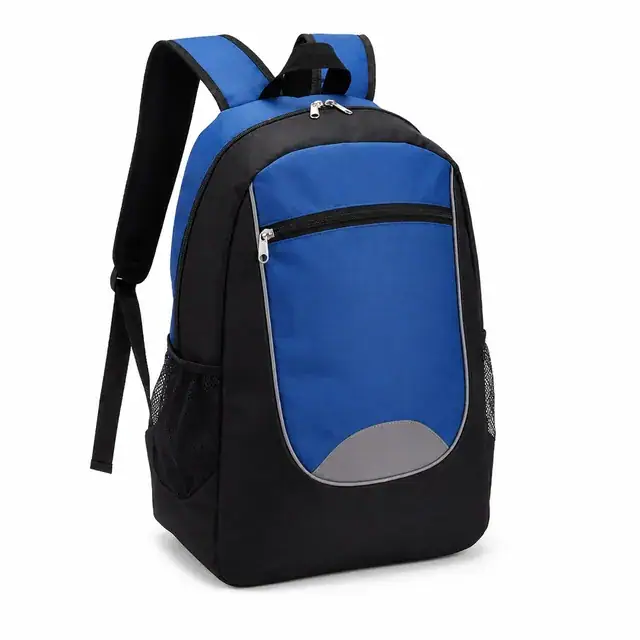
Two catalogue models make good starting points: the customisable microfiber pencil pouch for branding and the two-tone 600D stationery pouch, both 23.5×8×8 cm. You can see them with matching backpacks in our school bags and pencil cases range.
MOQ, lead time and pricing for bulk pencil cases
For a catalogue pencil pouch the minimum is 500 pcs per colour; for a new pattern or custom-dyed colour it is 1,000 pcs per colour. Small trial runs of 100–300 pcs are sometimes possible on pouches, at a higher unit price.
Bulk production takes 25–35 days after sample approval, and peak season from July to October adds about a week. Since that window overlaps with back-to-school, buyers planning for August shelves usually place orders in the spring. Sea freight adds 28–40 days to North Europe or the US East Coast.
The biggest price drivers on pencil pouches are size, fabric, number of print colours, internal compartments and packaging. Cheap pencil cases usually save money on zip gauge and lining — the two places that decide how long the case lasts. If you are pricing for a school programme, it is worth paying for those and saving elsewhere.
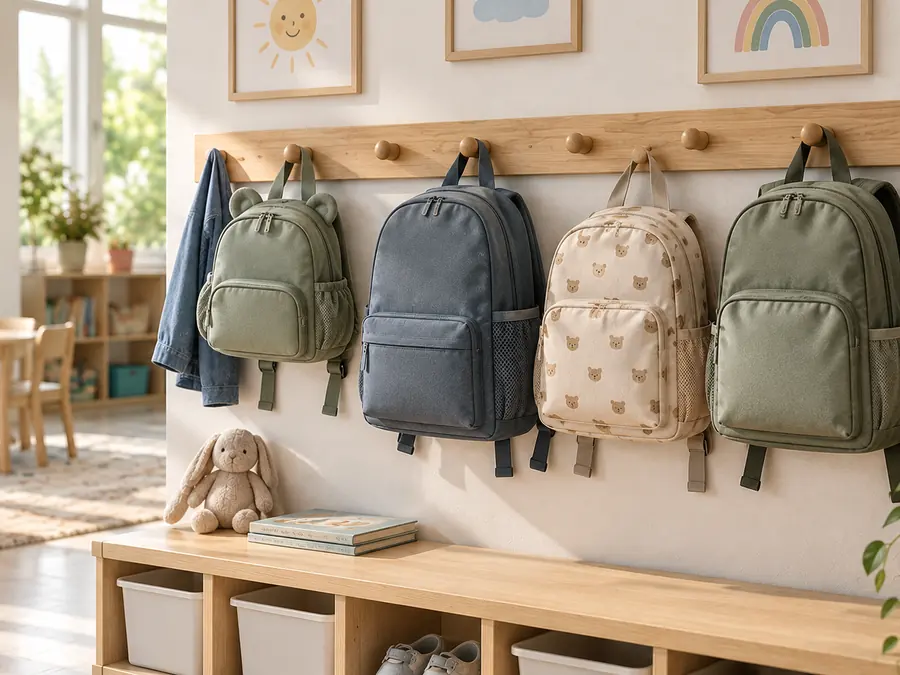
Many buyers develop pencil cases together with backpacks and lunch bags so the range shares colours and artwork; our back-to-school backpacks, lunch kits and pencil cases project shows how that comes together. For a matching backpack, see the kids school backpack.
Pencil case specification checklist
- Format: soft pouch, clear, compartment, box-style
- Finished size in cm, and the longest item it must hold
- Outer fabric with weight; lining fabric
- Zip type and gauge; puller style
- Colours in Pantone; decoration method and positions
- Target market and required test reports
- Packing: polybag, header card, inner and master carton
- Quantity per colour and target delivery date
Send the list with your artwork through our quote request form and you will get a written reply within one working day.
Frequently asked
What is the best type of pencil case for school?
For most students, a soft zippered pencil pouch in coated polyester or microfiber is the best all-round choice. It is light, fits any backpack, wipes clean and lasts well if the zip is a decent gauge. Older students with many items may prefer a compartment case, and exam rooms often ask for a clear pouch.
Are clear pencil cases allowed in exams?
Many schools and exam boards ask students to bring stationery in a clear pencil case so invigilators can see the contents, but rules vary by country, board and exam. Students should check their own exam centre’s guidance. For retailers, a clear pouch is a sensible line to stock ahead of exam season.
What is the minimum order for custom pencil pouches?
For a catalogue pencil pouch, the minimum order is 500 pcs per colour. A new pattern or custom-dyed colour starts at 1,000 pcs per colour. Small trial runs of 100–300 pcs are sometimes possible on pouches at a higher unit price, which helps when testing a design before a larger order.
What testing does a children’s pencil case need?
It depends on the market. In the EU and UK, EN 71-3 and REACH are typical; in the US, children’s products fall under CPSIA, including lead and phthalate limits, and Prop 65 may apply in California. Reports are issued per model and market in the buyer’s name, so specify where you will sell.
Can you print a different design on each pencil case?
Full-surface sublimation on microfiber or polyester allows detailed, full-colour artwork, and several designs can share one order if each meets the per-colour or per-design minimum. Individual names on every piece are usually done with printed panels or labels; discuss the quantity per design with us at quotation so the method fits the budget.