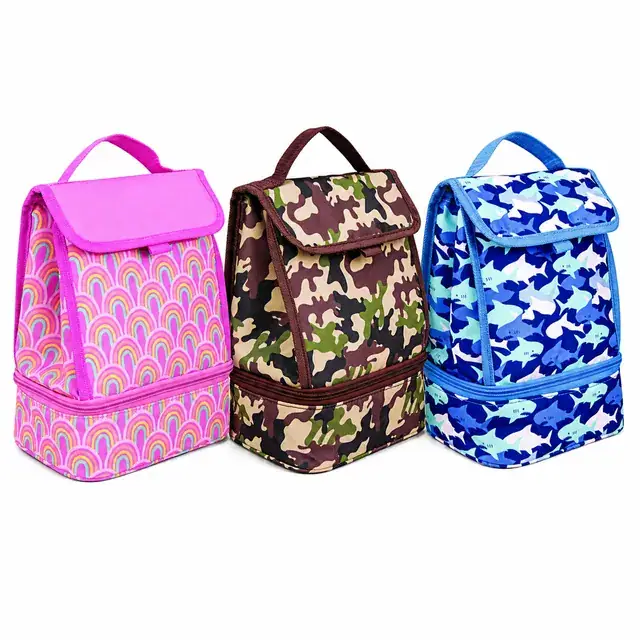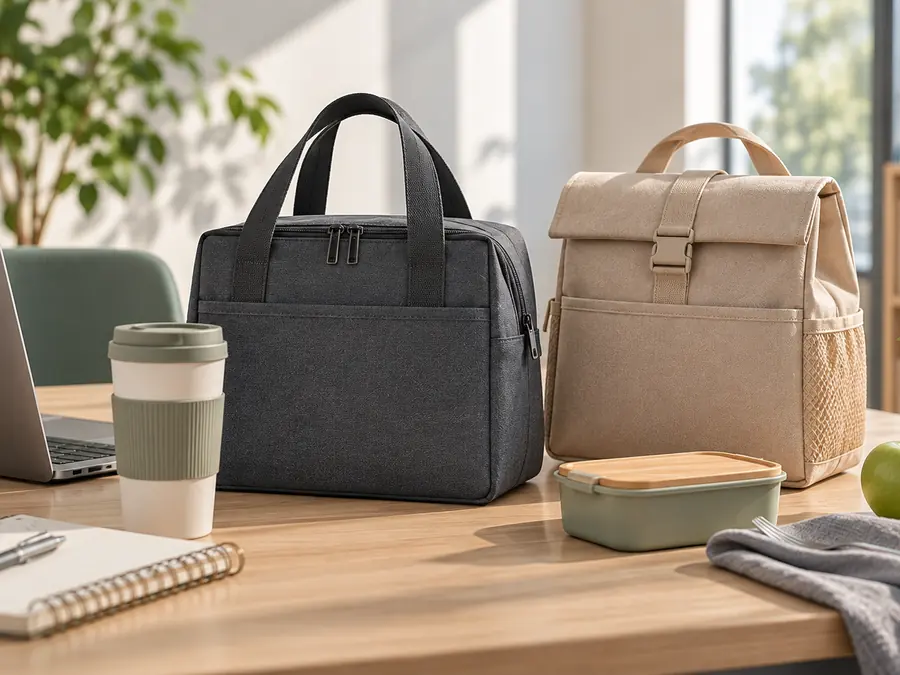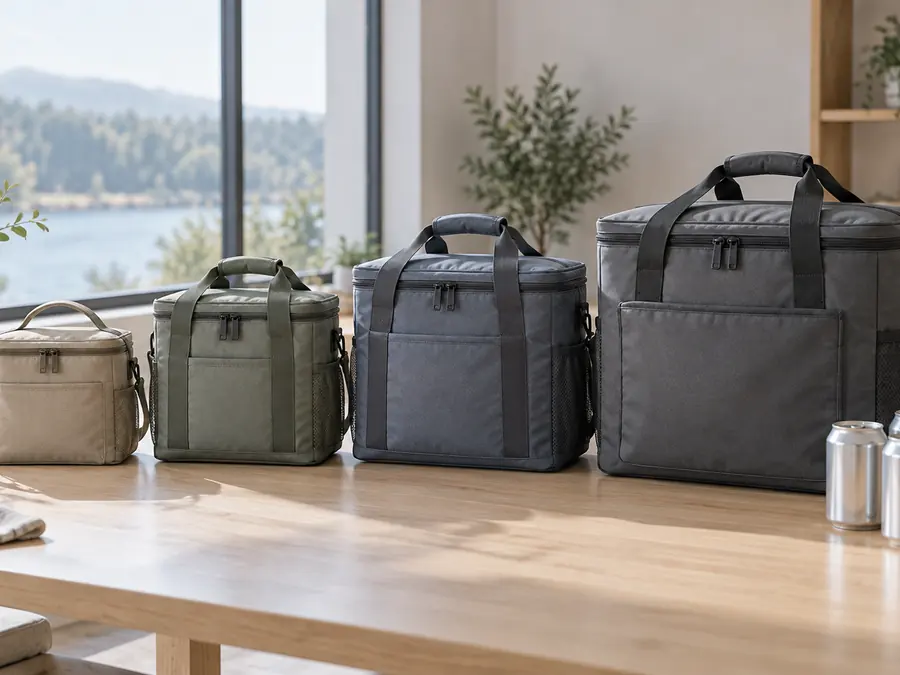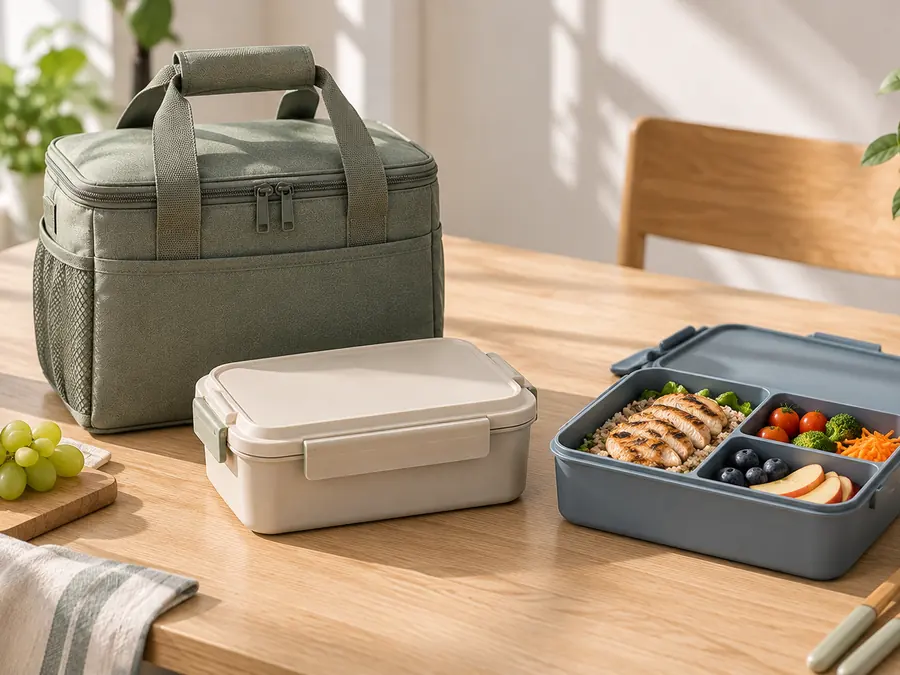
A lunch box is a rigid container, a bento is a compartmented box, and a lunch bag is a soft insulated carrier for containers, a drink and an ice pack. Only an insulated bag with an ice pack keeps food cold for hours, so most lunch ranges anchor on insulated lunch bags in several sizes, with containers sold to fit inside.
"Lunch box" is one of the broadest searches in the category. The same phrase covers a hard plastic box with a clip lid, a metal lunch pail, a Japanese bento with compartments and a soft insulated bag with a zip. For a retailer or brand building a back-to-school or work-lunch range, the useful question is not which one is "best" but which formats the range needs, how they work together, and which one carries the margin. This guide compares the three formats and shows how to build a lunch range that sells as a set.
Lunch bag, lunch box or bento: what is the difference?
A lunch box is a rigid container, usually plastic or metal, that holds food directly. A bento is a rigid box divided into compartments for separate portions. A lunch bag is a soft, usually insulated carrier that holds containers, a drink and an ice pack. Most shoppers end up needing a container and a bag.
The confusion is built into the language. Many people call an insulated soft bag an "insulated lunch box" or a "lunch box cooler", and search results mix the two freely. A range that understands this, and sells the bag and the containers to work together, avoids the most common complaint: a box that does not fit the bag it was bought with.
Lunch boxes compared: format by format
Each format solves a different problem. Use the comparison below to decide which ones belong on the shelf and at what role.
| Format | What it does well | Limits | Typical customer |
|---|---|---|---|
| Hard lunch box (plastic) | Protects food from crushing; dishwasher-friendly; cheap | No insulation on its own; lids crack; odours in some plastics | Younger children, value shoppers |
| Metal lunch box or lunch pail | Durable, retro look, easy to clean | Conducts heat quickly; dents; heavy | Adults wanting a "grown up lunch box", gift buyers |
| Bento box | Portion control and separation; meal-prep friendly | Compartment seals vary; needs a carrier to stay cold | Meal-prep adults, parents packing varied lunches |
| Insulated lunch bag | Keeps food cold with an ice pack; carries containers, drink and cutlery; light; printable | Does not protect against crushing unless structured | Everyone who carries lunch more than a short distance |
| Lunch backpack or backpack-and-lunch-kit set | Hands-free; one purchase covers school day | Bigger, heavier, higher price point | Back-to-school, commuters, outdoor workers |
The bag is the format that answers the "keep it cold" question, because a rigid box without insulation does not keep food cold. That is why the insulated lunch bag is usually the anchor of a range, with containers merchandised alongside.
Which format should your lunch range include?
Most ranges need two layers: an insulated lunch bag line in several sizes and prints, and a container offer that fits inside it. Pick the container type from your customer; pick the bag sizes from the containers.
A practical way to build it:
- Define the customer and the day. A primary-school child, a teenager, an office worker and a site worker carry different volumes and travel different distances.
- Choose the containers first. Measure the bento or box footprints you will sell or recommend, including a drink bottle.
- Size the bags around them. Container footprint plus room for one gel pack, with minimal air gap.
- Set the price ladder. Entry kids' bag, a mid-range adult bag, and a large or backpack format at the top.
- Plan print and colour. One construction in several prints is far cheaper to run than several constructions.
- Merchandise as a set. Bag plus box, or backpack plus lunch kit, lifts the basket value and solves the fit question for the shopper.
We make the soft side of this equation: insulated lunch bags, lunch totes and lunch backpacks. We do not manufacture hard plastic or metal boxes or bento containers, so for a bag-and-box set we design the bag around the container you have chosen, or around samples you send us.
Insulated lunch boxes: what makes one actually keep food cold
An insulated lunch box (in the soft-bag sense) keeps food cold through a foam wall, a sealed liner and an ice pack. Our standard 10 mm EPE construction with a welded leak-proof liner and two gel packs keeps refrigerated food below 8 °C for roughly 6–8 hours at 25 °C ambient, as a design range.
When shoppers ask for the best insulated lunch box, the features they reward are consistent:
- A welded, wipe-clean liner that does not hold smells.
- A gel-pack pocket so the cold source sits against the food.
- A zip that runs smoothly with a puller children can grip.
- An outside pocket for cutlery and a name card.
- A shoulder strap on bigger sizes and a carry handle on all of them.
Thicker walls, a storm flap over the zip and a light outer colour extend hold time; a thin foil-lined snack bag shortens it. Price the ladder accordingly, and print only claims you have tested.
Cute lunch boxes, adult formats and big lunch pails
Print sells kids' lunch bags; construction and capacity sell adult ones. Design the two lines separately rather than shrinking or enlarging one pattern.
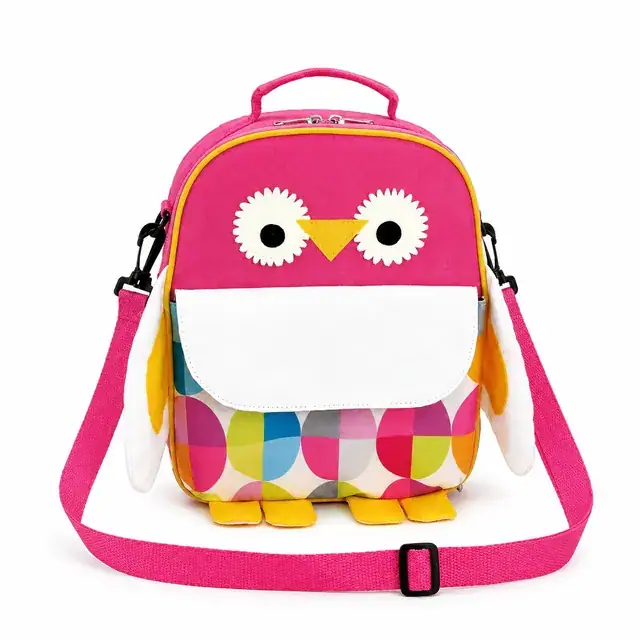
Kids and "cute" lunch boxes. Bright prints, character shapes and sequins drive the search. Small, light formats such as our 19 × 14 × 24 cm kids cooler bag or the owl-shaped insulated lunch bag fit a small bento and a drink. For children's products, testing such as EN 71-3 for the EU or CPSIA for the US is issued per model and market in your name, alongside food-contact migration testing on the liner.
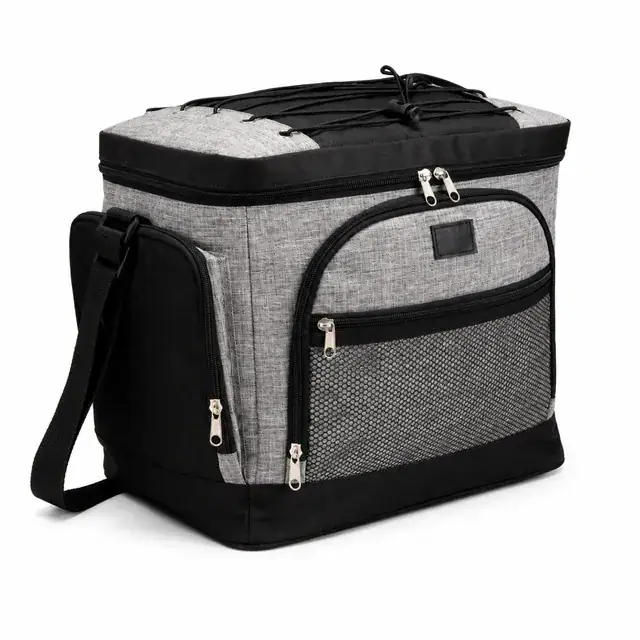
Grown-up lunch boxes. Adults want quiet colours, structured shapes and room for two containers. Two-tone fabrics, jacquard and black lunch box styles work well; see the 34.5 × 24 × 30 cm adult work lunch bag.
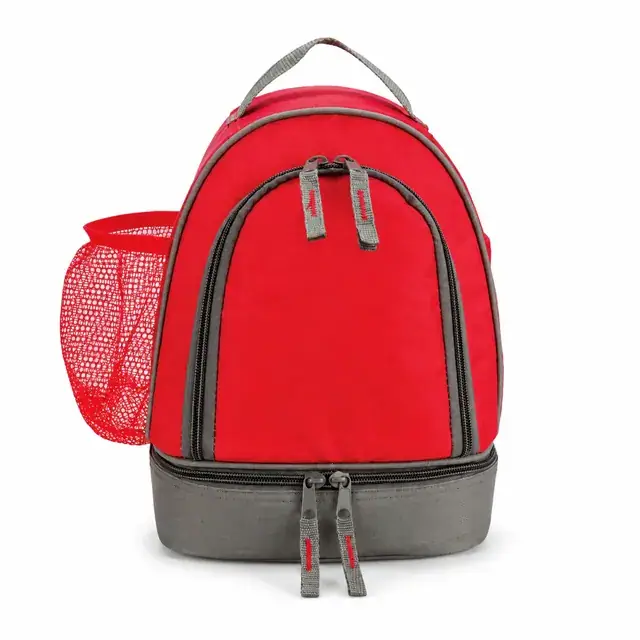
Big lunch pails and meal-prep bags. Site workers and meal-prep customers want the biggest lunch box that still carries comfortably. A double-layer bag, such as the 27.5 × 16.5 × 20 cm double layer lunch bag, separates hot and cold or two meals; a lunch backpack takes this further.
Backpack and lunchbox sets. For back-to-school, a coordinated backpack and lunch kit in the same print is a strong set. Our back-to-school backpacks and lunch kits project shows how one print runs across the bag family.
Custom and personalized lunch boxes for retail
For a custom lunch box programme, the soft bag is where branding is easiest and most visible. Screen print, heat transfer, sublimation, embroidery, woven labels and patches all work on lunch bag fabrics; full-surface sublimation gives edge-to-edge prints on polyester.
Commercial points to plan around:
- MOQ is 500 pcs per colour on a catalogue model and 1,000 pcs per colour for a new pattern or custom-dyed colour. Small trial runs of 100–300 pcs are sometimes possible on lunch bags at a higher unit price.
- A counter sample takes 7–12 days; bulk takes 25–35 days after approval, with about a week more from July to October.
- Personalized lunch boxes with individual names are usually finished locally after import; bulk production carries the brand and print, with a name card window or label panel if needed.
- Shelf readiness (hangtags, barcodes, polybags and carton marks) needs deciding before the sample, as covered in our guide to private-label lunch bags for retail.
To build a range, browse the insulated lunch bag collection and send us your container sizes and target price; we reply in writing within one working day.
Frequently asked
Is a lunch bag or a lunch box better for keeping food cold?
An insulated lunch bag with an ice pack keeps food cold far better than a plain rigid box, because a hard box has no insulation of its own. The best combination is a sealed container or bento inside an insulated bag with a gel pack touching the food. The box stops leaks; the bag and ice pack provide the cooling.
What is the difference between a lunch box and a lunch pail?
A lunch pail is a traditional, usually metal, lunch box with a handle, historically carried by workers. Today the term is used for any sturdy, larger lunch carrier, including big insulated lunch bags for site and shift workers. Metal pails are durable but conduct heat quickly, so they need an ice pack to keep food cold.
What is the best lunch box for adults?
For most adults, a structured insulated lunch bag with a welded liner, room for two containers and a drink, a gel-pack pocket and a shoulder strap. Quiet colours and two-tone or jacquard fabrics suit work settings. Pair it with leak-proof containers or a bento box sized to fit inside without large gaps.
Are insulated bento boxes worth it?
An insulated bento keeps portions separate and adds some thermal protection, but a thin insulated shell holds temperature for less time than a foam-walled lunch bag with an ice pack. For longer days, a standard bento inside an insulated lunch bag usually performs better and costs less to replace.
Can you make custom lunch boxes with our logo?
We make custom insulated lunch bags, totes and lunch backpacks with your logo, using screen print, heat transfer, sublimation, embroidery, woven labels or patches. We do not manufacture hard plastic or metal boxes, but we size the bag around your chosen containers. MOQ is 500 pieces per colour on catalogue models.